
- U.S. maritime expert April Herlevi highlights how research, emerging technologies, and collaboration can ensure a secure Indo-Pacific region.

By Krittika Sharma
A stable Indo-Pacific is essential for safeguarding key trade routes, accessing deep-sea resources, and supporting resilient supply chains that underpin economic and strategic interests. As the region spans vast distances and touches many jurisdictions, no single country can address its security challenges alone.
That cooperative approach was a key message from U.S. speaker April Herlevi, a senior research scientist at the Center for Naval Analyses, the U.S. Department of the Navy’s federally funded research and development center. “You can’t expect one country to manage maritime security for an entire ocean. I really think it is imperative for like-minded democracies to work together, coordinate, and figure out what we need and how to make this safe — not only for safety-at-sea issues, but also for keeping formal trade open and working with partners on various issues,” she said.
“You can’t expect one country to manage maritime security for an entire ocean. I really think it is imperative for like-minded democracies to work together, coordinate, and figure out what we need and how to make this safe — not only for safety-at-sea issues, but also for keeping formal trade open and working with partners on various issues,” she said.
During her visit to India under a U.S. State Department speaker program, Herlevi met with analysts, scholars, researchers, journalists, and think tanks in Hyderabad, Mumbai, Chennai, and New Delhi to discuss maritime security, technology, and regional economic issues.
Keeping the seas secure
Herlevi highlighted that maritime security can have far-reaching effects. Illegal fishing in the Pacific Islands, for example, is closely tied to food security. “Illegal fishing is probably the number one issue there. If they don’t have access to those fisheries, they don’t have sufficient food for their populations,” she explained. Coordinated, multi-country efforts are necessary to address these challenges and prevent local disruptions from affecting wider trade and supply networks.
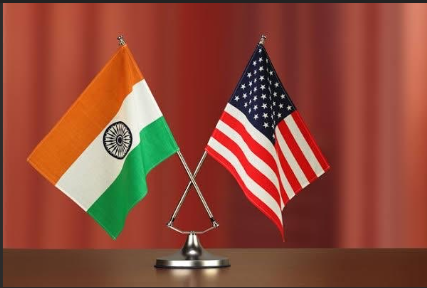
Technology is also reshaping how countries monitor and understand the oceans. “There is a range of technologies — whether it’s sensors, uncrewed submersible vehicles, autonomous systems, or drones — through which we are learning more about the deep sea,” she noted.
These tools are providing new insights into the maritime environment at surface, subsurface, and deep-sea levels, offering unprecedented opportunities to strengthen situational awareness and guide maritime management decisions. These insights not only improve regional safety but also strengthen U.S. capabilities to monitor and respond to emerging threats across critical trade and resource routes.
From resources to collaboration
Herlevi noted that emerging technologies could make deep-sea resource extraction feasible, but challenges remain. “We are increasingly looking at technologies that can extract these resources, but then there’s the question of policy, regulation, and who manages those operations.” Coordination through multilateral forums, including the Quad, provides a venue to discuss economically responsible approaches to critical minerals and other maritime resources, supporting U.S. supply chains and technological leadership.
The U.S.–India partnership also presents practical opportunities for collaboration. For example, as the United States develops its Maritime Action Plan and invests in shipbuilding, Herlevi said, “India could partner on initiatives like subsea cable maintenance, a critical aspect of the global digital economy,” helping maintain the reliability of critical infrastructure that underpins American commerce and communications.
Drawing lessons from the Pacific Islands, she emphasized the importance of working with local governments. “You do need to coordinate with these countries, but can you find a mechanism so that you’re not overburdening local governments, while still delivering results?”
From emerging maritime technologies to coordinated regional strategies, Herlevi’s insights underscore a core point: stability in the Indo-Pacific strengthens U.S. security and economic interests. By investing in collaborative research, equitable technology access, and robust partnerships, like-minded nations can help ensure the region remains secure and prosperous.
[This Article, published in the SPAN Magazine, U.S. Embassy New Delhi, is reproduced here.]
