
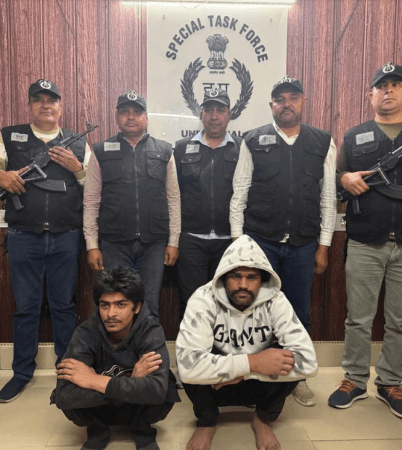
Authorities have launched a comprehensive investigation into grave security and administrative lapses at the RS Pura Juvenile Observation Home following the dramatic escape — and subsequent recapture — of two Pakistani nationals, both of whom had crossed the legal age threshold for detention in a juvenile facility. The incident has triggered widespread scrutiny of the officials responsible for managing the home, with punitive action likely for failing to transfer overage inmates to a regular jail as mandated by law.
The two Pakistani detainees, Mohammad Sanaullah (20) and Ahsan Anwar (21), who managed to flee the facility on February 16, have since been handed over to the Special Operations Group (SOG) of the Jammu and Kashmir Police for sustained interrogation. However, the circumstances surrounding their escape have cast a long shadow over the functioning of both the police and the Social Welfare Department, which holds supervisory responsibility over the juvenile home.
A Premeditated, Calculated Escape
What has alarmed investigators most is the evidence suggesting that the escape was not an impulsive act but a carefully premeditated plan. Fresh details emerging from the ongoing probe reveal that the accused had been closely and methodically observing the daily operations and security routines of the facility for several days prior to their escape. In a particularly audacious move, the inmates reportedly attempted to disable the juvenile home’s internal CCTV network in a bid to evade detection. While they succeeded in knocking out a portion of the camera system, the facility’s core surveillance infrastructure remained operational and captured the entire sequence of events — a critical oversight on the part of the escapees that has since provided investigators with vital evidence.
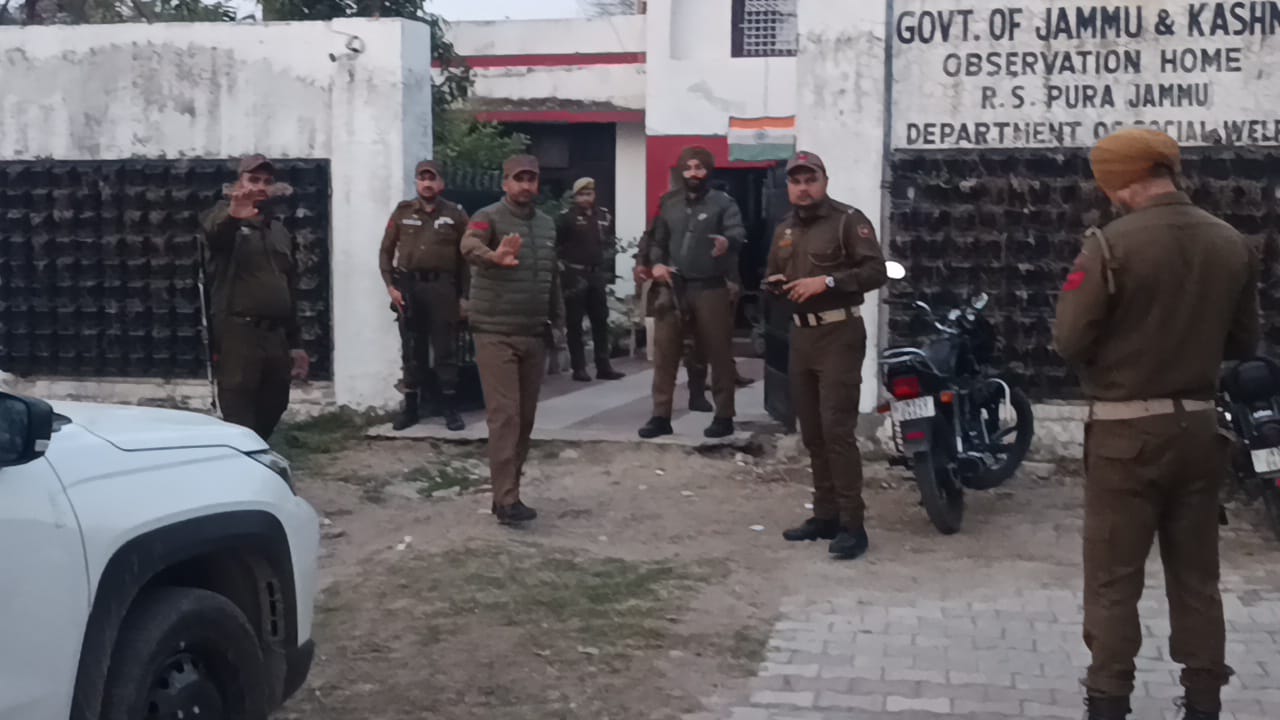
The Glaring Administrative Lapse
At the heart of the controversy lies a fundamental failure to adhere to established legal protocol. Under the rules governing juvenile facilities, any inmate who attains adulthood must be promptly transferred to a regular correctional facility. Yet, despite having crossed this age threshold, Sanaullah and Anwar were allowed to remain lodged in the juvenile home. Compounding the problem, a third inmate, Karanjit Singh alias Gugga — a member of the dreaded Khauf gang with as many as 11 criminal cases registered against him across multiple police stations — was similarly kept in the juvenile home well past the age of majority.
Sources have revealed that local intelligence agencies had, on at least one prior occasion, written formally to senior officers flagging Gugga’s continued presence in the juvenile home as a serious security risk. The agencies had specifically recommended his immediate transfer to a regular jail, citing both his adult status and his extensive criminal record. These inputs, however, were reportedly ignored by the concerned officials — a lapse that has now returned to haunt the administration in the most embarrassing fashion.
Physical Infrastructure Left to Deteriorate
Beyond the administrative failures, the probe has also drawn attention to the poor state of the facility’s physical security infrastructure. Officials have admitted that the outer boundary wall of the juvenile home was in a state of disrepair for a considerable period, yet no timely action was taken to carry out the necessary repairs. This structural vulnerability made it relatively easy for the inmates to scale the wall and make good their escape — a basic security gap that should have been addressed long before the incident occurred.
Swift Recapture, Lingering Questions
In a swift and coordinated operation, the Special Task Force (STF) of the Haryana Police, working in close collaboration with the Jammu and Kashmir Police, managed to rearrest both Pakistani nationals from Ambala within 24 hours of their escape on February 16. Their recapture on February 17, while reflecting well on inter-agency coordination, has done little to deflect the serious questions now being asked about how they were allowed to remain in a juvenile facility in the first place, and how the escape was allowed to happen at all.
Adding another troubling dimension to the case, a local youth identified as Rahul has also been taken into SOG custody after it emerged that he had allegedly supplied a country-made pistol to the two Pakistani nationals. His involvement raises the possibility that the escapees had outside assistance, further deepening the investigation.
Accountability and the Road Ahead
The incident has exposed what officials now acknowledge are systemic failures on multiple fronts — negligence in maintaining physical infrastructure, disregard for legal requirements governing the housing of adult offenders in juvenile facilities, and an apparent failure to act on actionable intelligence inputs. The Social Welfare Department, the district administration, and the Jammu and Kashmir Police all find themselves under the scanner, with action against erring officials now being described as a near-certainty.
Gugga’s escape, in particular, has not only laid bare the dysfunction in the management of the juvenile home but has also reignited broader concerns about security management across the district. With the SOG now conducting sustained questioning of all those involved, the full extent of the lapses — and the accountability that follows — is expected to become clearer in the days ahead.
