

An inside look at how American innovation, strong institutions, and practical collaboration drive growth at home and influence global markets.
By Giriraj Agarwal
The United States continues to shape global economic policy through strong financial markets, robust export promotion, and cutting-edge innovation that drive national prosperity.
The recent International Visitor Leadership Program (IVLP) on “America First: Trade, Development, and Finance” offered international policy professionals an inside look at how U.S. economic strategy is designed and implemented, showing how American systems create opportunities for businesses and workers alike.
Among the participants was New Delhi-based public policy professional Aditi Sharma, whose career spans government service, diplomatic missions, and the development sector.
“The program showed how the United States aligns trade, finance, and development policy to strengthen its domestic economy while remaining globally competitive,” she says.
“The program showed how the United States aligns trade, finance, and development policy to strengthen its domestic economy while remaining globally competitive,” Aditi Sharma says.
Economic policy in action
Participants examined how the U.S. federal system shapes economic strategy, from policymaking processes to trade and export promotion initiatives that support regional growth. The program also provided opportunities to discuss international economic issues and explore how U.S. policies influence global markets.
For Sharma, the program offered insight into how economic policies move from strategy into action. “Personally, I wanted to understand how the ‘America First’ policy translates from intent into real institutions, incentives, and outcomes on the ground,” she says.
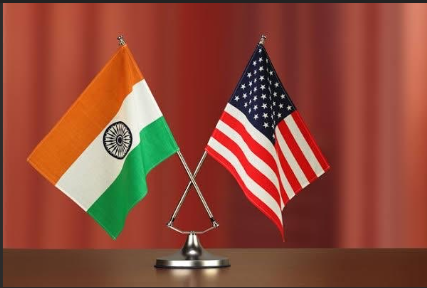
She was particularly interested in how global economic shifts affect American businesses and in gaining “a deeper sense of U.S. thinking on bilateral trade relations with India.”
A key takeaway was the decentralized and pragmatic nature of the U.S. economic system. “Economic strategy is not driven solely from Washington. States, cities, universities, and business groups play a powerful role in shaping outcomes,” says Sharma.
This system allows economic policy to stay grounded in local realities while remaining aligned with national priorities.
This decentralization was evident during visits to state-level institutions. The New Mexico Chamber of Commerce and the state’s Economic Development Department demonstrated how advocacy, workforce development, and trade policy work together in a coordinated, hands-on way.
Equally notable was the Small Business Development Center network, which showed “how sustained, local support can meaningfully prepare small firms to engage in exports and global markets,” she explains.
The program also highlighted the role of policy research and advocacy in shaping U.S. economic strategy. Think tanks like the Atlantic Council and the Information Technology and Innovation Foundation demonstrated how trade, technology, and geopolitics are closely connected.
Sharma was impressed by city and state economic development offices for their practical, problem-solving approach to supporting businesses, investment, and exports.
Insights into U.S. competitiveness
These experiences deepened her understanding of U.S. competitiveness. “The program reinforced that U.S. trade policy is closely tied to domestic priorities such as jobs, innovation, supply-chain security, and regional growth,” she says.
Instead of treating competitiveness as an abstract concept, the U.S. approach builds it through skills, productivity, and strong institutions at every level of government.
Another defining feature of the U.S. system, Sharma notes, is the role of advocacy groups and industry associations.
“I saw how actively advocacy groups, chambers of commerce, and industry associations engage with policymakers,” she says.
Their influence lies in translating broad policy goals into practical, business-focused inputs, particularly for small businesses and exporters, ensuring trade policy reflects real-world economic needs.
The program also offered insights into U.S. financial governance through discussions with trade law experts, policy institutes, and economic research organizations.
As Sharma notes, “I gained indirect but useful insights into how U.S. financial markets operate and are regulated.” These exchanges highlighted the role of strong institutions and regulatory frameworks in sustaining economic stability.
Innovation emerged repeatedly as a cornerstone of U.S. economic strength. “Universities and innovation hubs act as connectors—linking research, capital, talent, and markets,” Sharma says.
Public-private partnerships, she adds, ensure that innovation is translated into viable products, start-ups, and regional economic opportunities.
Looking ahead
Sharma sees strong potential for deeper U.S.-India cooperation. “There are strong opportunities in advanced manufacturing, digital trade, energy, and start-up ecosystems,” she says, highlighting the value of collaboration at the state level and between universities and innovation hubs to build resilient and mutually beneficial economic ties.
Several lessons from the IVLP are directly relevant to her policy work in India. “The emphasis on empowering local economic institutions, strengthening industry-government dialogue, and building integrated support systems for small businesses and exporters is highly transferable to the Indian context,” Sharma reflects.
One particularly notable takeaway was the U.S. focus on early career awareness through initiatives like “Be Pro Be Proud,” which aims to elevate vocational and technical careers from a young age.
Together, these lessons illustrate how the U.S. approach to economic leadership is both resilient and globally influential.
[ This article, already published in SPAN Magazine, U.S. Embassy New Delhi, is reproduced here for our readers]
