Even as the report of the Cabinet Sub-Committee on reservations in Jammu and Kashmir is still awaited, refugees from Pakistan-occupied Jammu and Kashmir (PoJK) have launched a fresh mobilization drive to press for their inclusion in the Scheduled Tribe (ST) category.
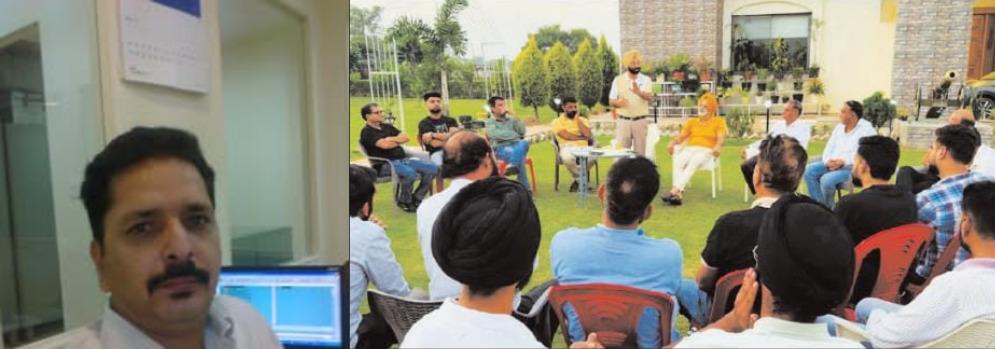
Led by social activist Shashi Kant Khajuria, groups of PoJK refugees have begun a door-to-door campaign across Jammu province, urging community members to unite for what they describe as their “genuine and long-pending demand” of being granted ST status.
Khajuria argued that PoJK refugees are ethnically and culturally part of the Pahari tribe, yet have been unfairly excluded from the benefits of ST recognition.
-
“Although we have been living in different parts of Jammu province since our displacement in 1947, we too belong to the Pahari ethnic group. There is no reason to exclude us from the Scheduled Tribe category”.
‘Discriminated Despite Being Paharis’
Refugees living in the plains of Jammu province pointed out that many of their community members, who were rehabilitated in Poonch and Rajouri after Partition, have been granted ST status, while those settled in Jammu, Samba, Kathua, Udhampur, and other districts continue to be denied the same benefits.
“Although we have been living in different parts of Jammu province since our displacement in 1947, we too belong to the Pahari ethnic group. There is no reason to exclude us from the Scheduled Tribe category,” Khajuria told Gaon Tribune.

Expressing resentment, he added: “ST status has been granted to the ethnic Pahari tribe, but those living in the plains of Jammu have been denied this right. As all PoJK refugees are Pahari-speaking, we are demanding equal treatment.”
In another statement to The International Business Times, Khajuria said a mass awareness campaign had been launched to counter what he described as a “glaring case of discrimination.”
“The selective granting of ST status only to displaced persons from Rajouri-Poonch is both discriminatory and unjust. Our community shares the same ethnic, cultural, and socio-economic background as them. It is shocking that we are excluded,” he asserted.
Khajuria further alleged that vested interests within the administration were “deliberately misinterpreting rules and misleading the government,” resulting in continued denial of rights to PoJK refugees in several districts.
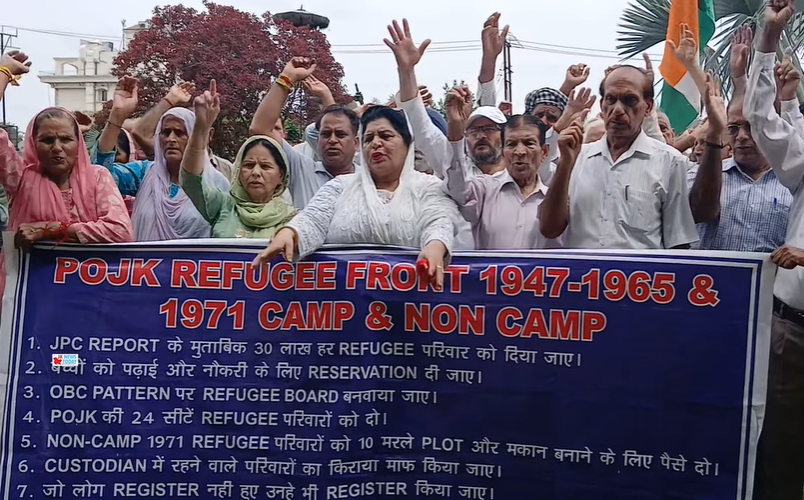
Background of PoJK Refugees
The PoJK refugee population traces its origins to the 1947 tribal invasion backed by Pakistan, which led to massacres and mass displacement. Thousands of Hindu and Sikh families were forced to flee from districts such as Poonch, Muzaffarabad, Kotli, and Mirpur.
Around 50,000 families initially migrated to India, and their numbers have since grown to over 12 lakh, with nearly 10 lakh currently residing in Jammu province. Despite being recognized as Displaced Persons from Pakistan-occupied Areas of J&K (PoJK DPs) under Order No. 1476-C of 1950, the community claims that bureaucratic neglect has prevented them from accessing benefits granted to other displaced groups. Many families who had settled outside J&K were not even registered officially, compounding their marginalization.
ST Status Granted to Paharis in 2024
On February 6, 2024, the Lok Sabha passed the Constitution (Jammu and Kashmir) Scheduled Tribes Order (Amendment) Bill, 2023. This legislation included the Pahari ethnic group, along with the Paddari Tribe, Koli, and Gadda Brahman communities, in the Scheduled Tribe list of Jammu and Kashmir.
While this decision was hailed as historic by Pahari groups, PoJK refugees argue that the same recognition must also extend to their community, given their shared language, culture, and ethnic roots.