Seventeen lives. Forty-nine days. And still, no answers.
In the shadow of the Pir Panjal range, Badhal village — a quiet hamlet in Rajouri’s Kandi block, home mostly to economically weaker families — was once the kind of place outsiders rarely thought about. Then, in the winter of 2024, it became a place the rest of Jammu and Kashmir could not stop thinking about.
It began with a child.
On December 7, 2024, seven-year-old Nazia Kousar fell ill with what looked, at first, like food poisoning. She did not survive. Within hours, her brothers, Ishtiaq and Ashfaq were rushed to Kotranka Civil Hospital and then on to GMC Jammu. Ishtiaq would not come home either. Nor would his sister Ruksar.
Then the nightmare spread next door.
Fazal Hussain, 40, died at GMC Rajouri on December 8. The same day, two of his daughters — Farmana, 7, and Rabia Kausar, 14 — died while being transported to Jammu. His son Ruksan Ahmed, 10, died at SMHS Hospital. Four days later, his youngest, Raftar Ahmed — just four years old — was gone too.
Three families. Four clusters of illness. Fifty-five people afflicted. Seventeen dead — thirteen of them children.
- On December 7, 2024, seven-year-old Nazia Kousar died after showing symptoms consistent with food poisoning.
- December 8, 2024: Fazal Hussain (40) died at GMC Rajouri. His daughters Farmana (7) and Rabia Kausar (14) passed away while being transported to Jammu, followed by his son Ruksan Ahmed (10) at SMGS Hospital.
- December 12, 2024: Fazal’s youngest son, Raftar Ahmed (4), died at SMGS Hospital.
- December 12, 2024: Mohammad Rafiq’s daughter, Nazia Kausar (7), died in Rajouri. His sons, Mohammad Ishtiaq (10) and Ishfaq Ahmed (12), passed away en route to SMGS Jammu and PGIMER Chandigarh.
- December 23, 2024: Mohammad Rafiq’s pregnant wife, Rajim Begum, succumbed at GMC Rajouri.
- January 12, 2025: Mohammad Aslam’s children, Navina Kausar (9) and Zahoor Ahmed (14), died at SMGS Hospital in Jammu.
- January 13, 2025: Mohammad Aslam’s son, Mohammad Maroof (10), died of the “mysterious disease,” while his grandfather, Mohammad Yousuf, passed away from shock.
- January 14, 2025: Mohammad Aslam’s youngest daughter, Safina Kouser (12), passed away in the SMGS ICU.
- January 16, 2025: Javina Kousar, daughter of Mohammad Aslam, died.
- January 17, 2025: Jatti Begum, wife of Mohammad Yousuf, succumbed.
- January 19, 2025: Yasmeena Jan (15), daughter of Mohammad Aslam, passed away.
The symptoms were eerily consistent across every case: abdominal pain, vomiting, fever, drowsiness, breathlessness, a strange cloudiness of the mind that doctors call altered sensorium. Whatever was happening, it moved fast, and it moved through families like a shadow passing from house to house.
By January, a third family — that of Mohammad Aslam — had been consumed by the same horror. Between January 12 and 19 alone, six members of his family died: his children Navina Kausar (9), Zahoor Ahmed (14), Mohammad Maroof (10), Safina Kouser (12), and Javina Kousar — as well as his teenage daughter Yasmeena Jan (15), who became the last of the 17 to die. His father, Mohammad Yousuf, died of shock. His mother, Jatti Begum, followed two days later.
The village had, in seven weeks, lost an entire generation from three of its families.
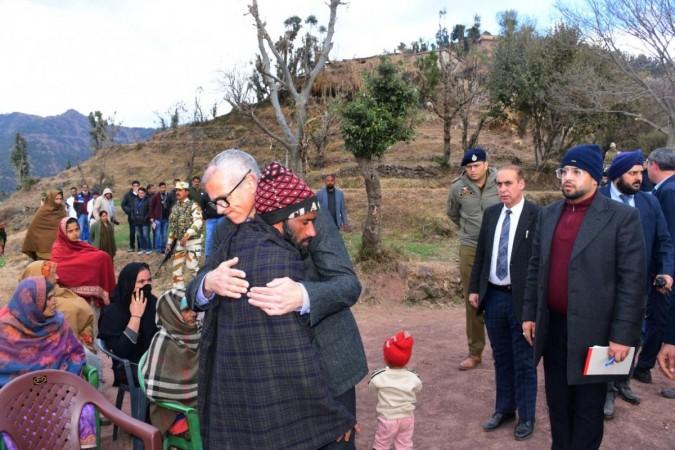
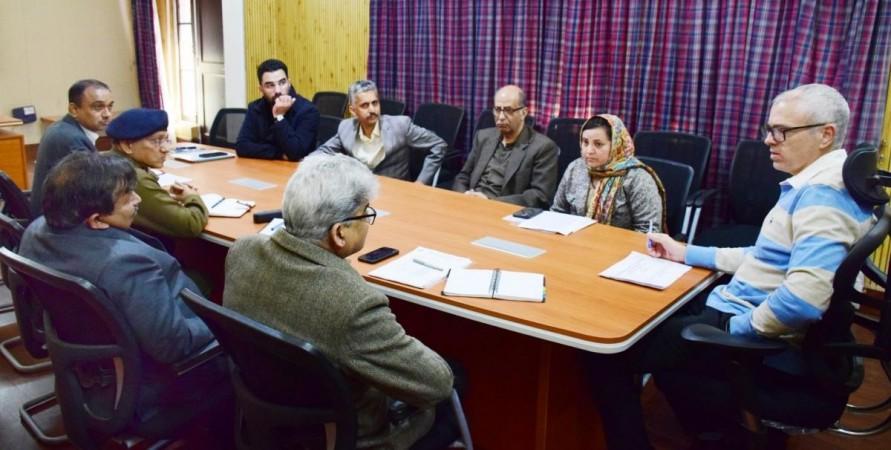
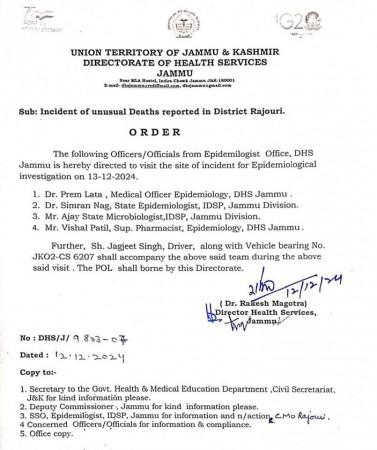
The response, when it came, was vast. Medical camps were set up. Rapid response teams fanned out across the village for contact tracing. Isolation wards were established at GMC Rajouri, GMC Jammu and SMHS Hospital Jammu. Door-to-door surveillance covered 3,577 residents. Samples — food, water, medicines, biological specimens — were dispatched to laboratories across the country. Expert teams arrived from ICMR, NCDC, PGIMER Chandigarh, AIIMS New Delhi. The Chief Minister reviewed the situation personally.
On January 18, Union Home Minister Amit Shah ordered an inter-ministerial investigation team to descend on Badhal.
The machinery of the state moved. And yet the question that mattered most — why? — remained unanswered.
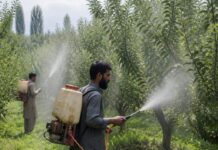
Fifteen months on, some things are clearer, though they raise as many questions as they resolve. Toxicological analysis by CSIR–Indian Institute of Toxicology Research in Lucknow and PGIMER Chandigarh has ruled out a viral or bacterial outbreak. What investigators found instead were traces of pesticide compounds — aldicarb sulfone, acetamiprid, and butoxycarboxim — along with elevated cadmium levels in some samples. The working hypothesis is neurotoxic exposure, though how, and why only these families, remains unestablished.
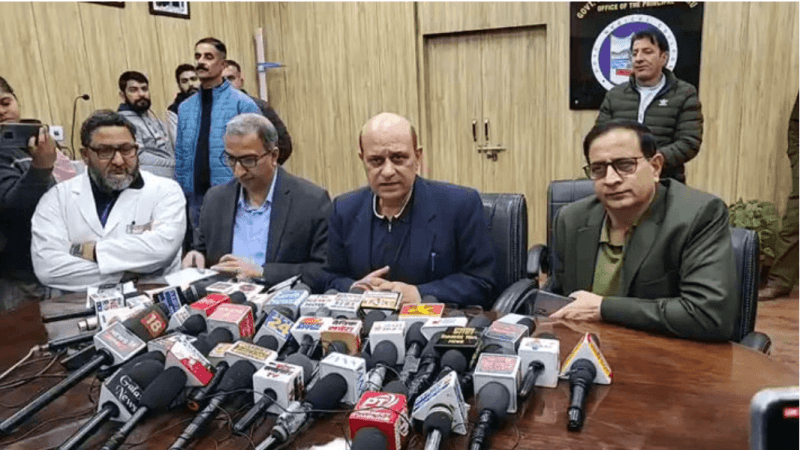
A Special Investigation Team and an inter-ministerial team constituted by the Ministry of Home Affairs are still piecing the story together.
Health Minister Sakina Itoo, responding to a question in the Legislative Assembly last Saturday, confirmed that an expert panel continues to examine the case. Thirty-eight patients, she noted, have been discharged after full recovery. The index patient — the very first to fall ill — recovered and was discharged on January 2, 2025.
But for Badhal’s three bereaved families, recovery is a word that hardly applies. They buried their children in the frozen ground of a Rajouri winter, and they are still waiting — as the rest of Jammu and Kashmir waits with them — to be told why.
The investigation is ongoing.