
By Anuj Kumar Verma, Environmental Advocate and Policy Writer
Horticulture remains the backbone of the economy in Jammu & Kashmir and Himachal Pradesh, yet a troubling divide has emerged in how apple orchards are managed across India’s hill states. Kashmir’s valleys produce more than three times the apples of Himachal and nearly fifty times those of Uttarakhand — but this bounty comes at a steep cost. The region now records the highest pesticide application rate per hectare of gross cropped area in India, far exceeding Punjab, Haryana, and Telangana.
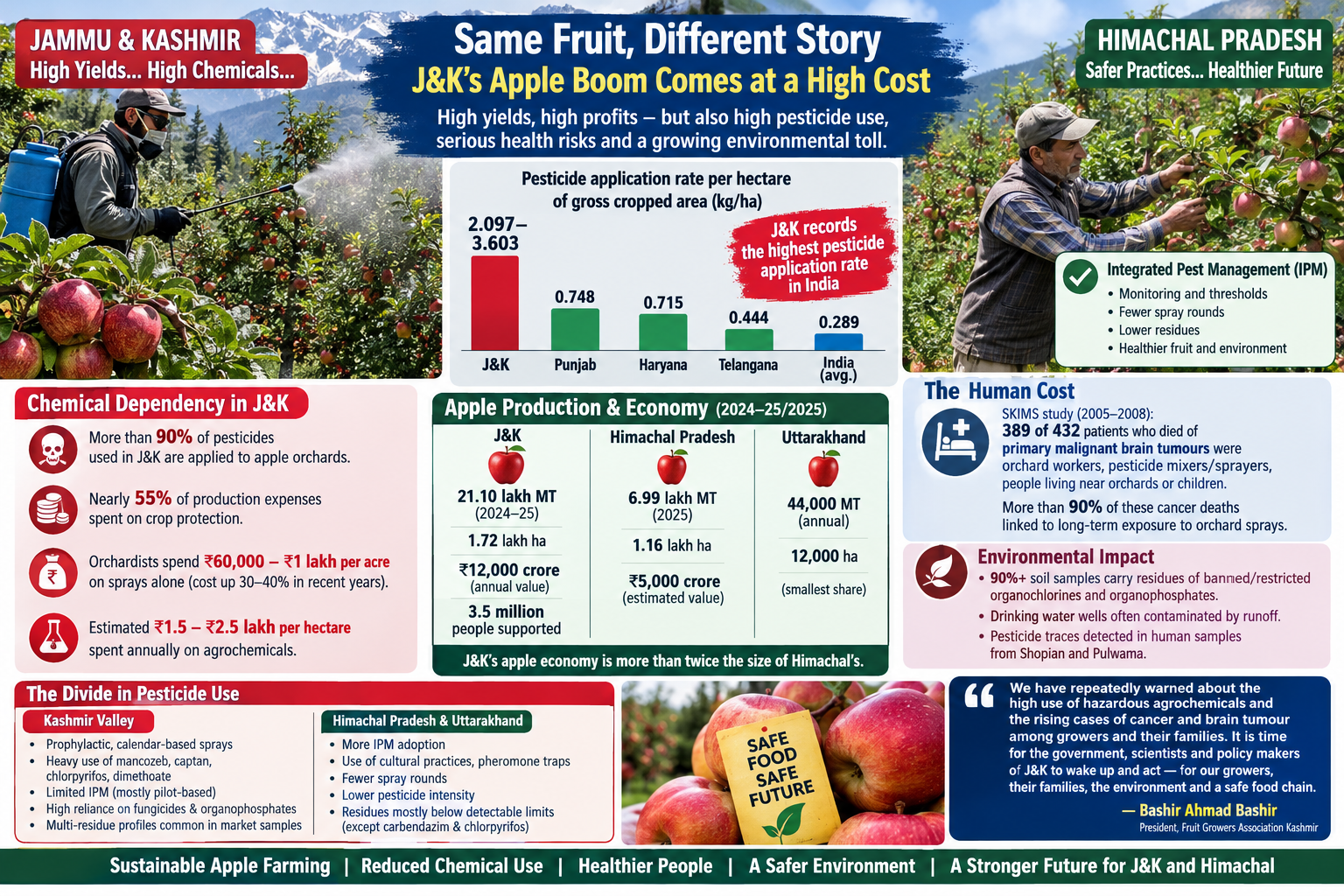
While the national average fell from 0.322 kg/ha in 2017–18 to 0.289 kg/ha in 2021–22, J&K surged to between 2.097 and 3.603 kg/ha in 2022–23. Official data shows that more than 90% of these chemicals are sprayed on apple orchards, with farmers spending nearly 55% of production costs on crop protection. In contrast, Himachal and Uttarakhand report far lower pesticide intensity, with Himachal building a stronger tradition of Integrated Pest Management (IPM) that reduces residues and protects human health.
Production Scale and Economic Stakes
Jammu & Kashmir: 21.10 lakh metric tonnes of apples in 2024–25 from 1.72 lakh hectares, valued at nearly ₹12,000 crore, supporting 3.5 million people.
Himachal Pradesh: 6.99 lakh tonnes in 2025 from 1.16 lakh hectares, worth about ₹5,000 crore.
Uttarakhand: 44,000 tonnes annually from 12,000 hectares — a fraction of its northern neighbours.
J&K’s apple economy is more than twice the size of Himachal’s, yet its dominance is shadowed by escalating chemical dependency.
Spray Culture: Kashmir vs Himachal
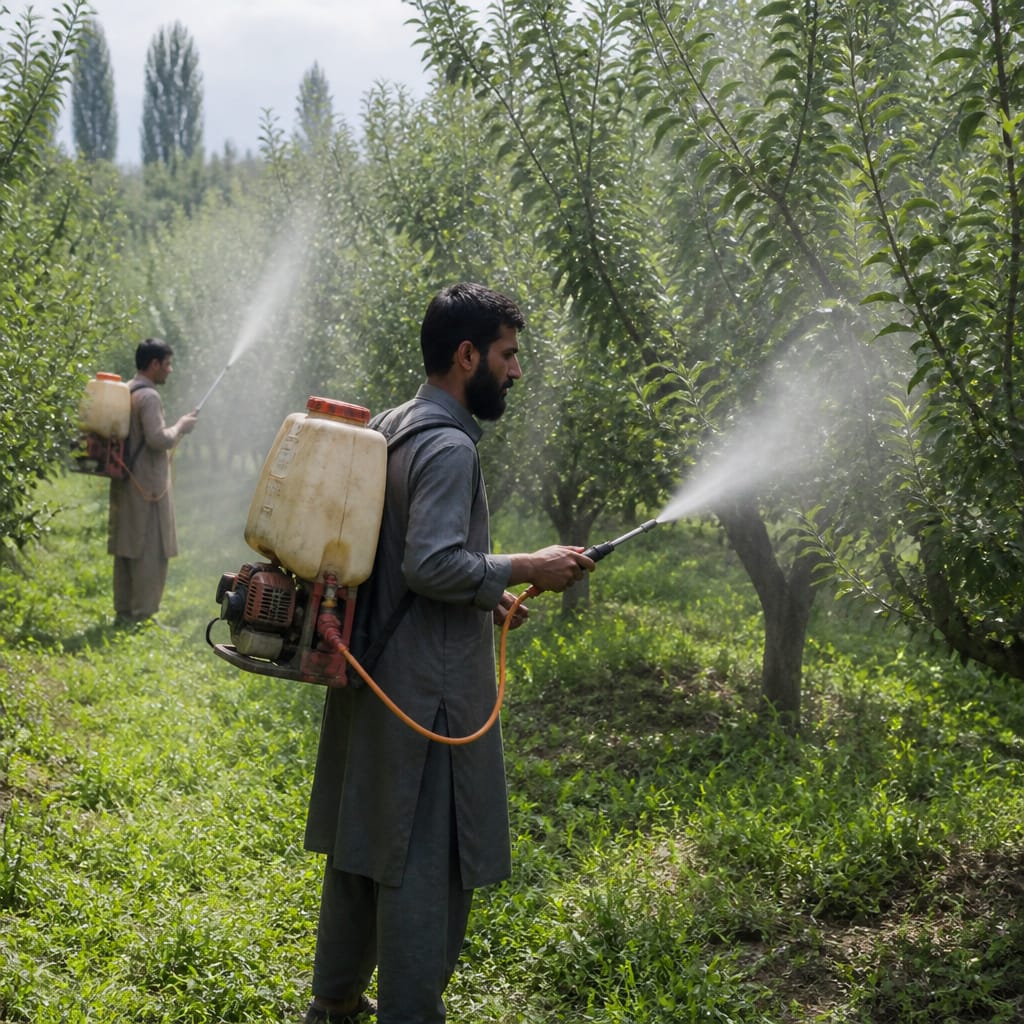
In Kashmir, orchardists follow a calendar-based spray schedule recommended by SKUAST-Kashmir and the Horticulture Department. Orchards receive multiple rounds of fungicides like mancozeb and captan, and insecticides such as chlorpyrifos and dimethoate — often without confirming pest presence. IPM adoption remains limited and largely experimental.
Himachal, by contrast, has embraced IPM more widely. Studies around Shimla show residues in IPM orchards are often below detectable limits, and even when present, they remain within safety thresholds. Uttarakhand’s adoption is patchy but emphasizes cultural practices, pheromone traps, and fewer sprays.
Rising Costs and Health Toll
In Kashmir, orchardists spend between ₹60,000 and ₹1 lakh per acre on sprays — translating to ₹1.5–2.5 lakh per hectare annually. Costs have risen 30–40% in recent years, worsened by substandard and spurious agrochemicals.
The health impact is devastating. A hospital-based study at SKIMS (2005–2008) found that over 90% of brain tumour deaths occurred among orchard workers, pesticide mixers, sprayers, or children exposed to treated areas. Such clustering of cancers has not been documented in Himachal, where risks exist but at lower intensity.
Environmental Fallout
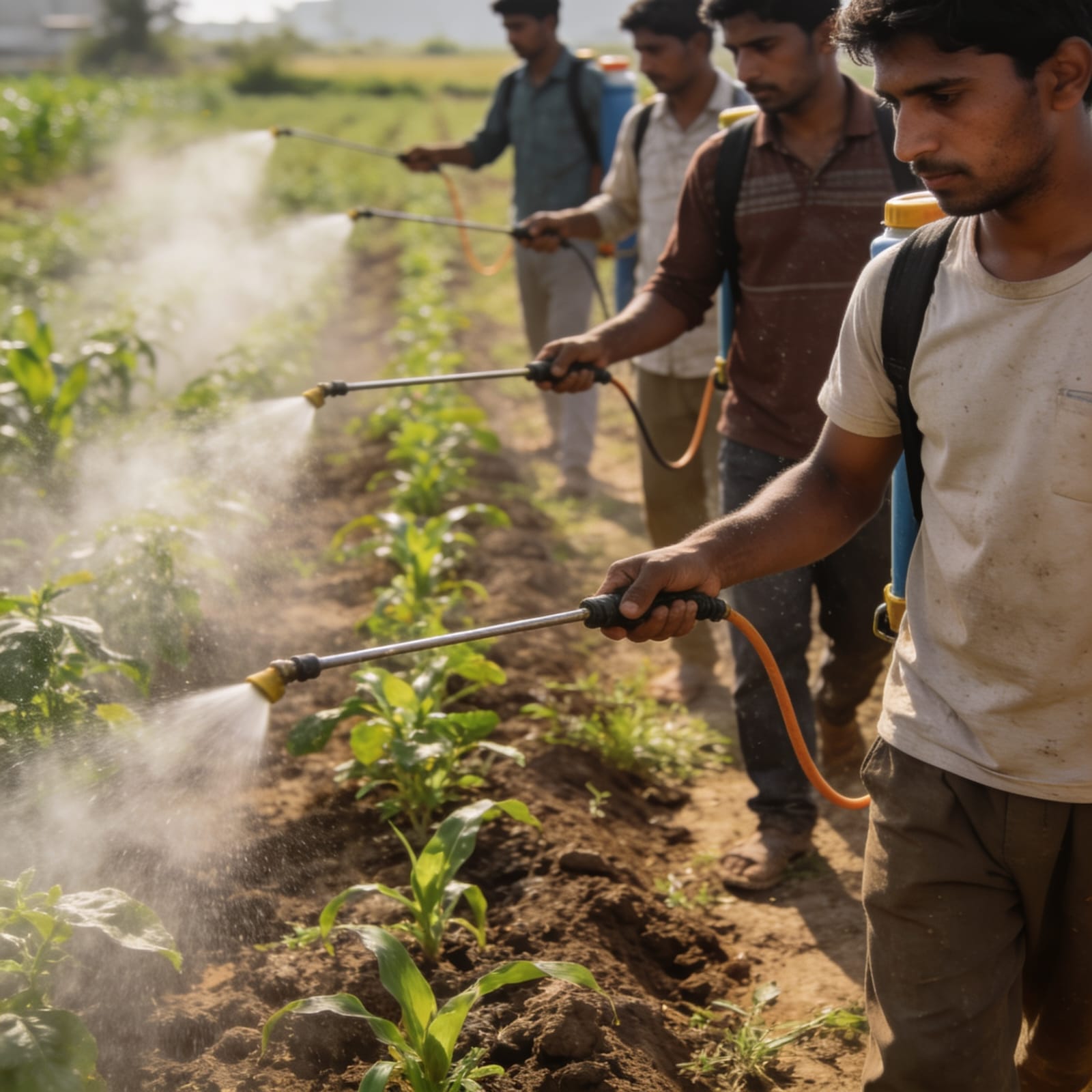
Doctors report that many farmers spray without protective gear. Residues have been detected in human samples from districts like Shopian and Pulwama. Soil surveys reveal more than 90% of Kashmir orchard soils carry residues of banned or restricted chemicals, while drinking-water wells are often contaminated by runoff. Himachal and Uttarakhand soils also show legacy residues, but current hazardous chemical diversity and intensity remain lower.
Residue Monitoring on Apples
An ICMR-linked study found 70% of apple samples from J&K, Himachal, and Uttarakhand exceeded safe residue limits. Kashmir’s apples showed heavier reliance on fungicides and organophosphates, with multi-residue profiles more common. Himachal’s IPM apples consistently carried lower residues, generally within prescribed limits.
Voices of Alarm
Bashir Ahmad Bashir, President of the Fruit Growers Association Kashmir, has repeatedly warned of the surge in hazardous agrochemical use and rising cancer cases among growers. He has urged the Union Agriculture Minister to replace existing apple and walnut varieties with disease-resistant strains, but enforcement against spurious pesticides remains weak.
“The government in J&K has no vision on this serious issue,” Bashir lamented, calling for urgent action to protect growers, families, the environment, and the food chain.
About the Author
 Anuj Kumar Verma is an Environmental Advocate and Policy Writer. He retired as District Officer after serving the Horticulture Department for thirty years. He is the Convenor of We The Humans Forum for Nature and Mankind, Jammu, a public charitable trust.
Email: [email protected]