A notorious foreign invader has been caught creeping into Kashmir’s farmland — and scientists at Sher-e-Kashmir University of Agricultural Sciences and Technology (SKUAST-K) are racing to stop it before it digs in for good.
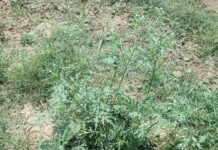
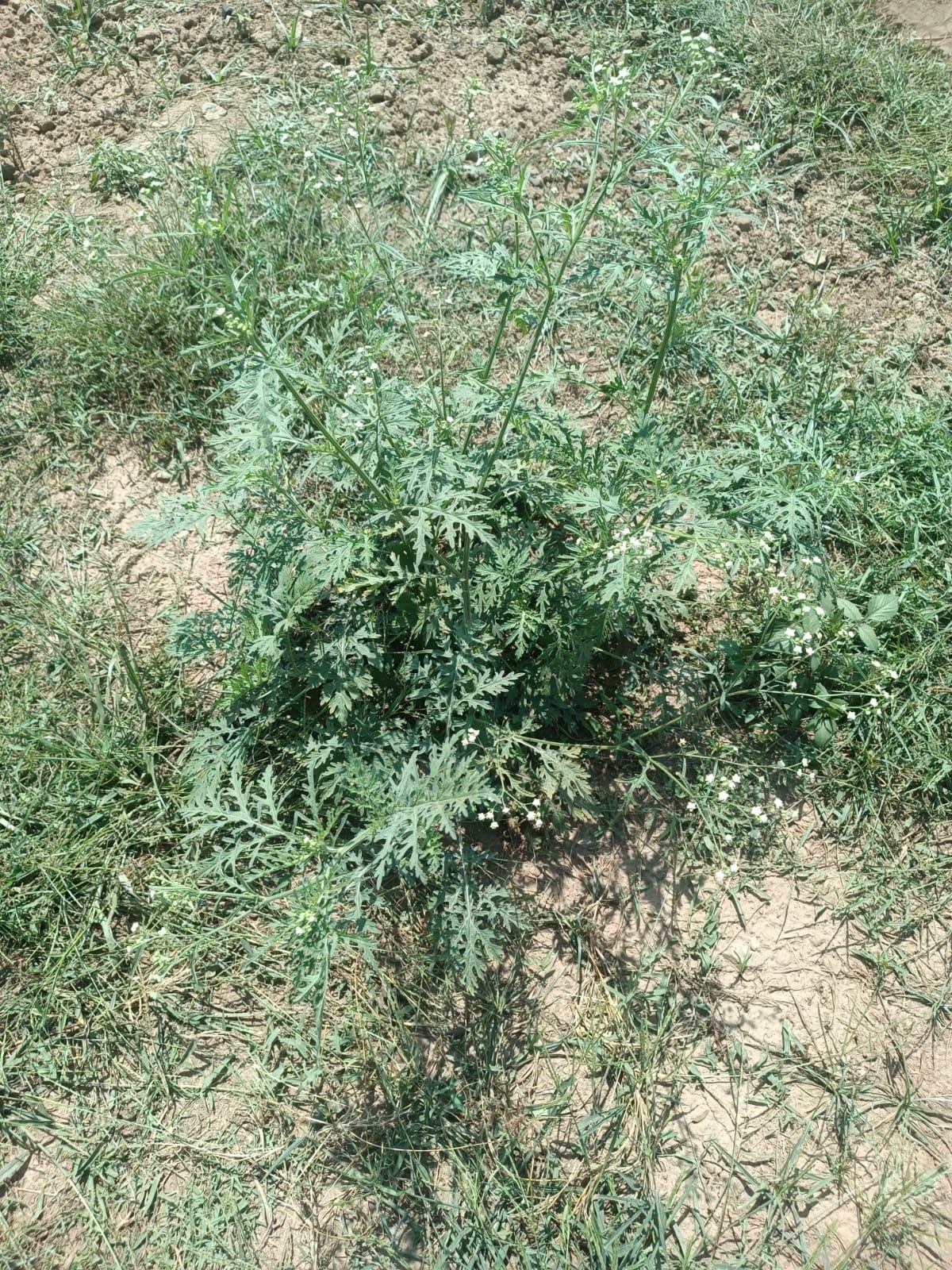
University researchers have confirmed a fresh sighting of Parthenium hysterophorus L. — globally reviled as one of the most destructive invasive weeds on the planet — in an agricultural field in Srinagar. The discovery has triggered an urgent advisory to farmers and agricultural stakeholders across the Valley: watch closely, act early, and don’t let this plant get comfortable.
A Plant With a Reputation
Parthenium isn’t just another weed. A member of the Asteraceae family, this fast-breeding annual has earned its notoriety the hard way — explosive growth, staggering seed output, and a chemical warfare strategy few native plants can withstand. Through allelopathy, it releases biochemical compounds into the soil that choke off the growth of neighbouring crops and wild vegetation alike. Left unchecked, it doesn’t just dent farm yields — it can unravel local biodiversity and destabilise entire ecosystems.
“Not Panic — But Don’t Look Away”
The team behind the discovery — Prof. Purshotam Singh, Prof. Amal Saxena, and Prof. Raihana Habib Kanth, Director of Extension at SKUAST-K — struck a measured but urgent tone. The Srinagar find, they said, is an early-warning flare, not cause for alarm. But that warning demands action: sustained, on-the-ground surveillance across farmland and disturbed habitats, where invasive species typically gain their first foothold.
Kashmir’s Climate Is No Longer a Shield
For years, Kashmir’s cold winters offered a natural buffer against many invasive tropical and subtropical species. That buffer may be eroding. New research now confirms that Parthenium can complete its entire life cycle within Kashmir’s temperate climate — a troubling first. Its seeds survive the winter buried in soil, germinate between late March and early May, and grow into full, seed-bearing plants well before the harsh autumn frosts return.
Scientists warn that continued seasonal warming could make conditions even friendlier for the weed’s spread. And Parthenium doesn’t need much help travelling — contaminated soil, farm machinery, irrigation water, vehicle movement, and tainted seed or feed stocks are all it takes to hitch a ride into new territory.
Old Threat, New Evidence
Parthenium has technically been recorded in Jammu & Kashmir before — this isn’t its debut. But the current findings mark something different: hard evidence that the weed has adapted and can now reproduce successfully under local conditions, a far more serious development than a stray historical sighting.
The Counterstrategy
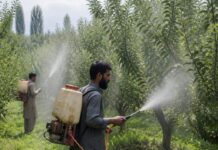
SKUAST-K scientists are pushing for a full-spectrum, integrated weed-management response — one built on coordinated surveillance, swift identification, mechanical and targeted eradication, and long-term monitoring. Their message to the Valley’s farming community is clear: the window to stop Parthenium from becoming a permanent fixture in Kashmir’s agro-ecosystem is still open, but it won’t stay open indefinitely.