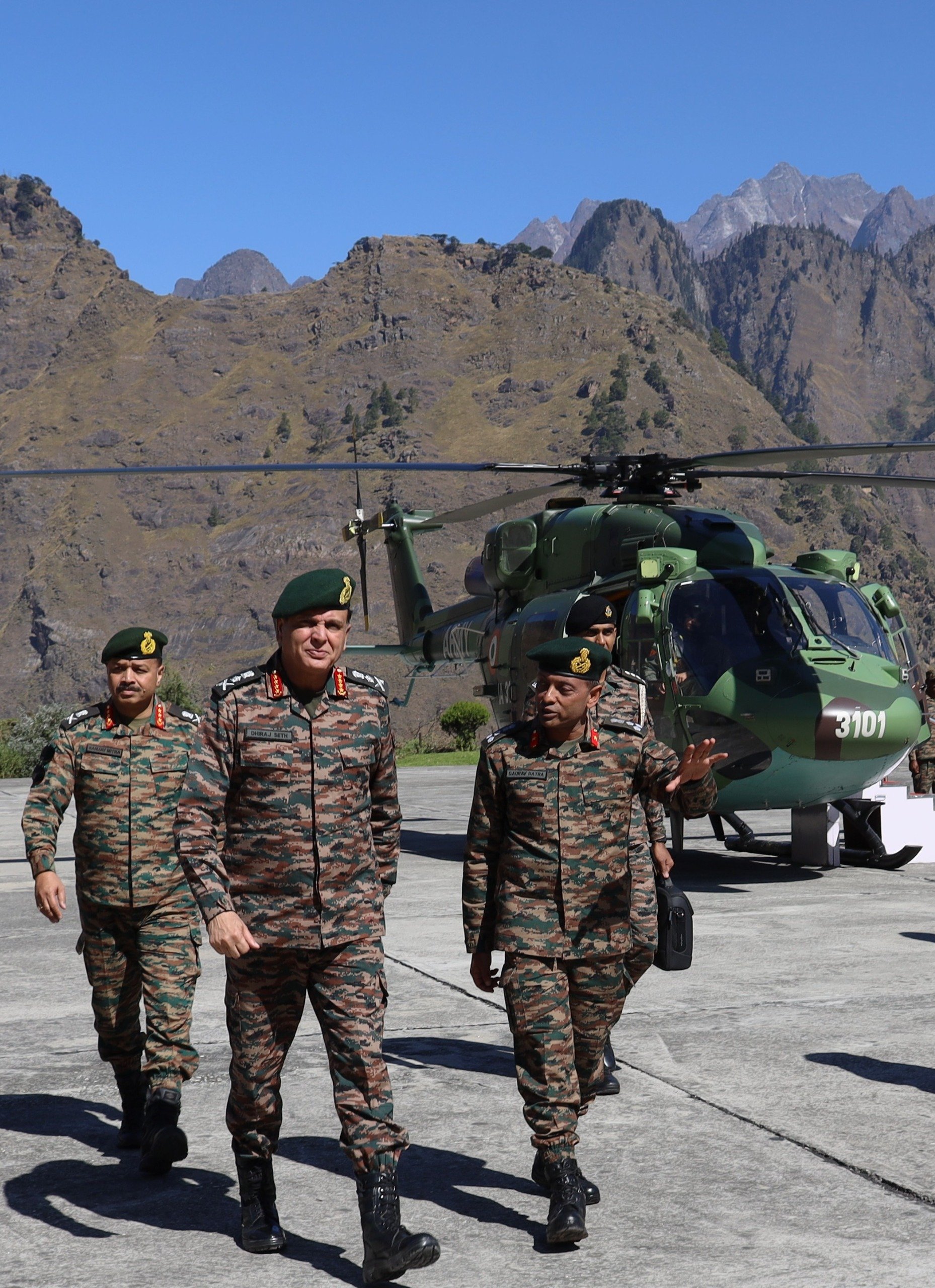
- Army Chief General Dhiraj Seth Reviews Operational Preparedness in Strategically Vital Garhwal Sector, Visits Mana – India’s First Village Amid Enduring Indo-China Border Tensions
In a significant demonstration of India’s sustained focus on border security and community development along the Line of Actual Control (LAC), Chief of the Army Staff (COAS) General Dhiraj Seth on Tuesday visited the Ibex Brigade at Joshimath and forward areas in the Middle Sector of the Northern Borders in the Garhwal region of Uttarakhand. He also travelled to Mana, officially recognised as India’s First Village, where he interacted with the local community.
The visit underscored the dual imperatives of operational readiness in high-altitude, inhospitable terrain and the Indian Army’s role in supporting border area development at a time when tensions with China continue to shape strategic priorities along the unresolved Himalayan frontier.
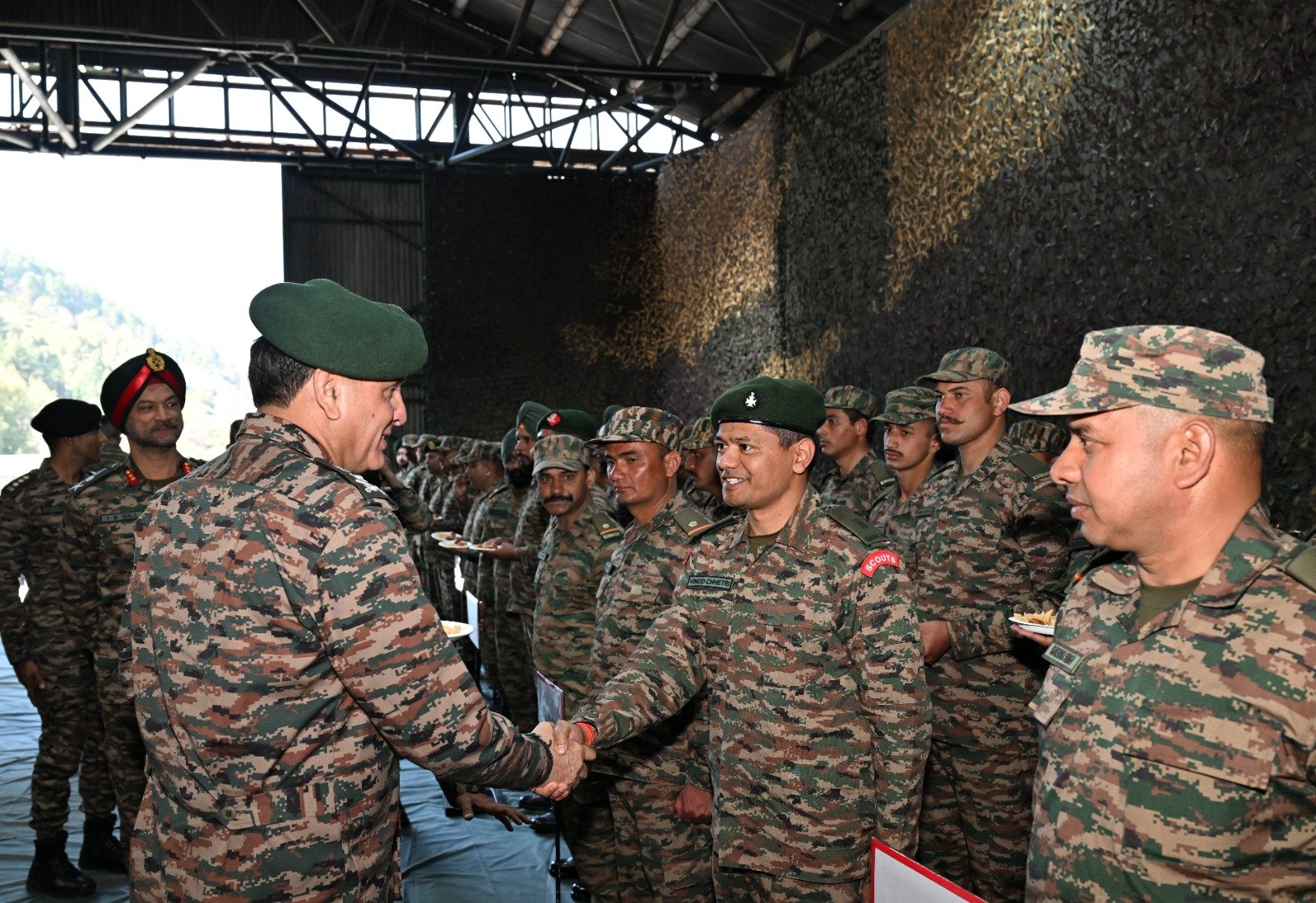
General Seth was briefed extensively on operational preparedness, combat readiness, technology integration, inter-agency synergy, and ongoing capability development initiatives. He reviewed infrastructure projects aimed at strengthening the Army’s ability to respond swiftly across the spectrum of operations. Interacting with troops of the Ibex Brigade and other formations, the Army Chief commended all ranks for their professionalism, dedication, and resilience while serving in the sector’s challenging high-altitude environment.
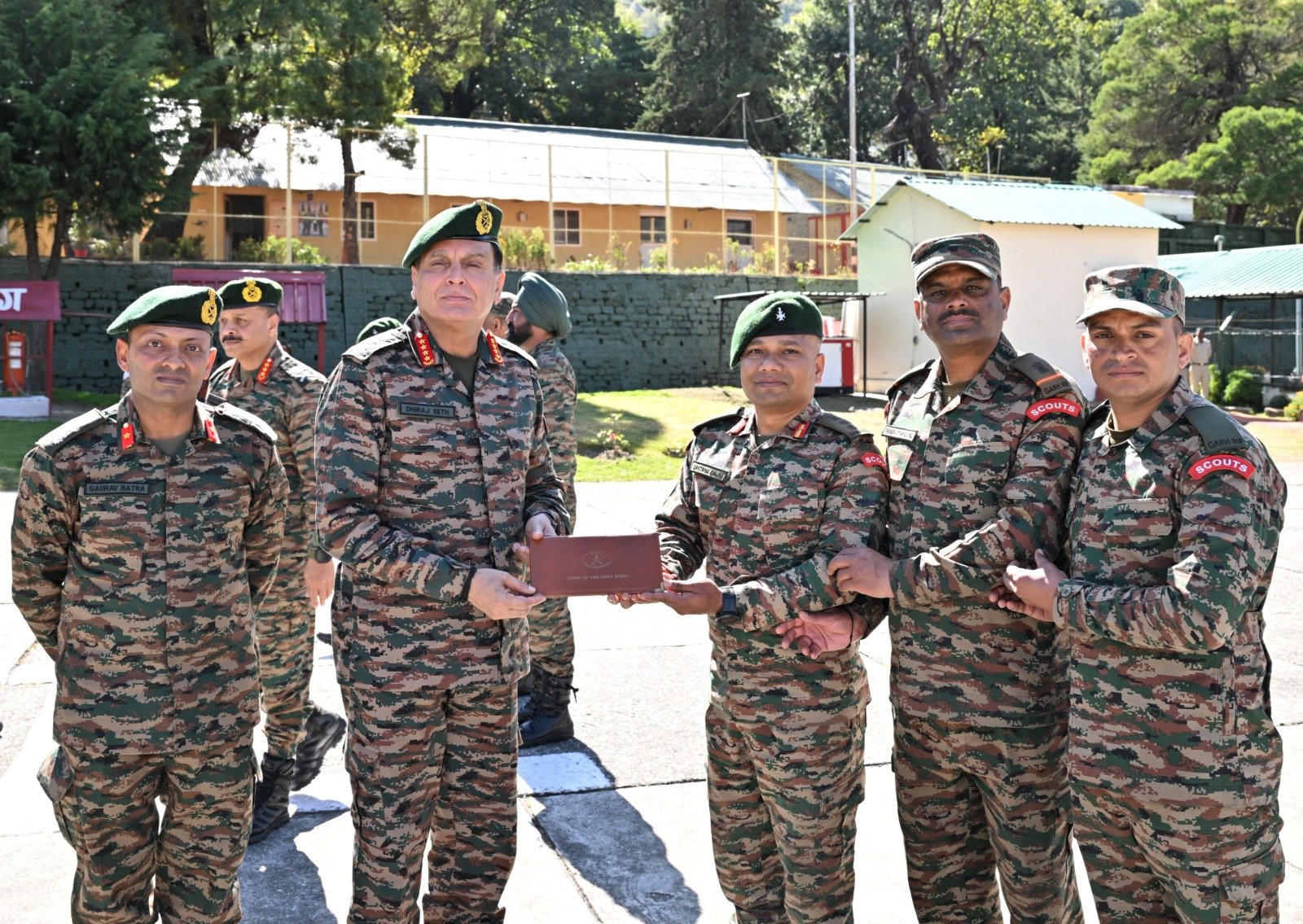
He exhorted personnel to embrace ‘VIJAY’, the five-point framework he has outlined for building an agile, future-ready force capable of rapid response. The COAS also stressed the importance of proactive Humanitarian Assistance and Disaster Relief (HADR) planning through joint exercises and close coordination with civil agencies to ensure effective responses to contingencies in the disaster-prone Himalayan region.
Mana, located at around 3,200 metres near Badrinath and close to the Mana Pass—an ancient trade route into Tibet’s Ngari region—holds both symbolic and strategic importance. Long known as India’s last village before the border, it was rebranded by Prime Minister Narendra Modi in 2022 as the country’s “First Village.” This shift reflects a broader policy emphasis under the Vibrant Villages Programme to reverse out-migration from frontier areas, promote tourism, preserve cultural heritage, and create sustainable livelihoods, partly as a counter to China’s model of developing dual-use “xiaokang” villages near the LAC. General Seth appreciated the collaborative efforts of Army personnel and local residents in these initiatives.
The Middle Sector of the LAC, spanning roughly 545 km across parts of Uttarakhand and Himachal Pradesh, has historically been viewed as relatively quieter compared to the western (Ladakh) and eastern (Arunachal Pradesh) sectors. However, its strategic weight has grown. The sector includes sensitive valleys such as Mana, Niti, Harsil, and Barahoti. Barahoti, about 100 km from Joshimath, was the site of the first Chinese claim on Indian territory in 1954 and has seen periodic Chinese patrols and incidents, including a reported intrusion by over 100 PLA soldiers in 2021 that damaged a bridge.
Post-2020 Galwan Valley clash in eastern Ladakh, which claimed the lives of 20 Indian soldiers, the entire LAC has witnessed heightened military deployments, infrastructure competition, and grey-zone activities. While significant disengagements occurred in parts of Ladakh, face-offs and deviations from established patrolling patterns have persisted, including ongoing confrontations in Arunachal Pradesh’s Upper Subansiri district near Asaphila and other locations. Chinese infrastructure expansion, increased troop mobility, and assertive patrolling have prompted India to bolster its presence and readiness across all sectors.
Recent diplomatic developments have sought to manage tensions. In August 2026, Special Representatives talks between National Security Adviser Ajit Doval and Chinese Foreign Minister Wang Yi led to agreement on Joshimath and Tawang as Indian-side meeting points for Corps Commander-level talks in the middle and eastern sectors respectively, along with new military hotlines. Yet trust remains limited, and both sides continue to prioritise military preparedness.
Joshimath itself serves as a critical staging ground and houses important Army facilities supporting deployments along the China border. The COAS’s review of technology integration and combat capabilities aligns with the broader modernisation drive to equip forces for high-altitude warfare, surveillance, and rapid mobilisation in terrain that favours the defender but demands exceptional logistical and physical endurance.
The visit also highlighted the Army’s expanding non-combat role. By engaging with communities in places like Mana, the force contributes to national efforts to integrate remote border populations more firmly into the country’s developmental mainstream. This approach seeks to ensure that strategic frontiers are not only militarily secure but also demographically and economically vibrant.
General Dhiraj Seth assumed charge as the 31st Chief of the Army Staff in June 2026, succeeding General Upendra Dwivedi. An Armoured Corps officer with prior command of two western operational commands, he has prioritised a future-ready Army capable of addressing evolving security challenges through technology, training, and jointness. His Garhwal visit reinforces the message that vigilance along the Northern Borders remains non-negotiable even as diplomatic channels with Beijing remain open.
In the broader context of Indo-China relations—marked by unresolved boundary disputes, competing infrastructure narratives, and periodic military friction—the Army Chief’s presence in the Middle Sector sends a clear signal of resolve. It affirms that India continues to invest in both hard power readiness and the soft power of community partnership to safeguard its frontiers in the high Himalayas.