Ladakh has doubled the procurement price of sea buckthorn — the Himalayan berry PM Modi hailed as "Sanjeevani" — from ₹150 to ₹300 per kg, LG Vinai Kumar Saxena announced at Leh's first International Sea Buckthorn Conclave. With 85% of the crop currently wasted due to harvesting challenges, the administration has set targets of 50% recovery this year and 100% by next, backed by a proposed national research centre in Nubra Valley.
By Kushagra
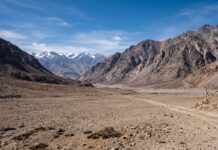
In a move set to transform fortunes across Ladakh’s cold desert, the Union Territory administration has doubled the procurement price of sea buckthorn — the hardy Himalayan super-berry that Prime Minister Narendra Modi famously hailed as a modern-day “Sanjeevani” during his Mann Ki Baat address. Lieutenant Governor Vinai Kumar Saxena announced that farmers will now receive a minimum of ₹300 per kg for the crop, up from ₹150 last year, in a decisive push to put more money directly into the hands of local growers and communities.
The announcement came as Saxena inaugurated the first-ever two-day International Sea Buckthorn Conclave in Leh, where he also unveiled a special postal cover featuring Ladakh’s sea buckthorn — a symbolic gesture cementing the berry’s growing identity as one of the region’s most prized natural assets.
From Obscure Wild Berry to Global Superfood
What was once a thorny, overlooked shrub dotting Ladakh’s high-altitude landscape has, in a remarkably short time, become a resource of national and international acclaim. The Prime Minister’s public endorsement of sea buckthorn’s medicinal potency, resilience in extreme altitudes, and dense nutritional value has propelled the fruit from a wild, underutilised plant into a globally recognised asset — drawing attention from buyers, researchers, and entrepreneurs far beyond Ladakh’s borders.

That momentum was on full display at the conclave, which brought together 20 leading buyers and roughly 120 MSME-registered entrepreneurs and Self-Help Groups from across the sea buckthorn value chain, alongside scientists, technical experts, and industry representatives from as far afield as Mongolia and Vietnam, as well as Arunachal Pradesh — creating a rare platform for shared learning and cross-border collaboration.
Tackling an 85% Wastage Problem, One Harvest at a Time
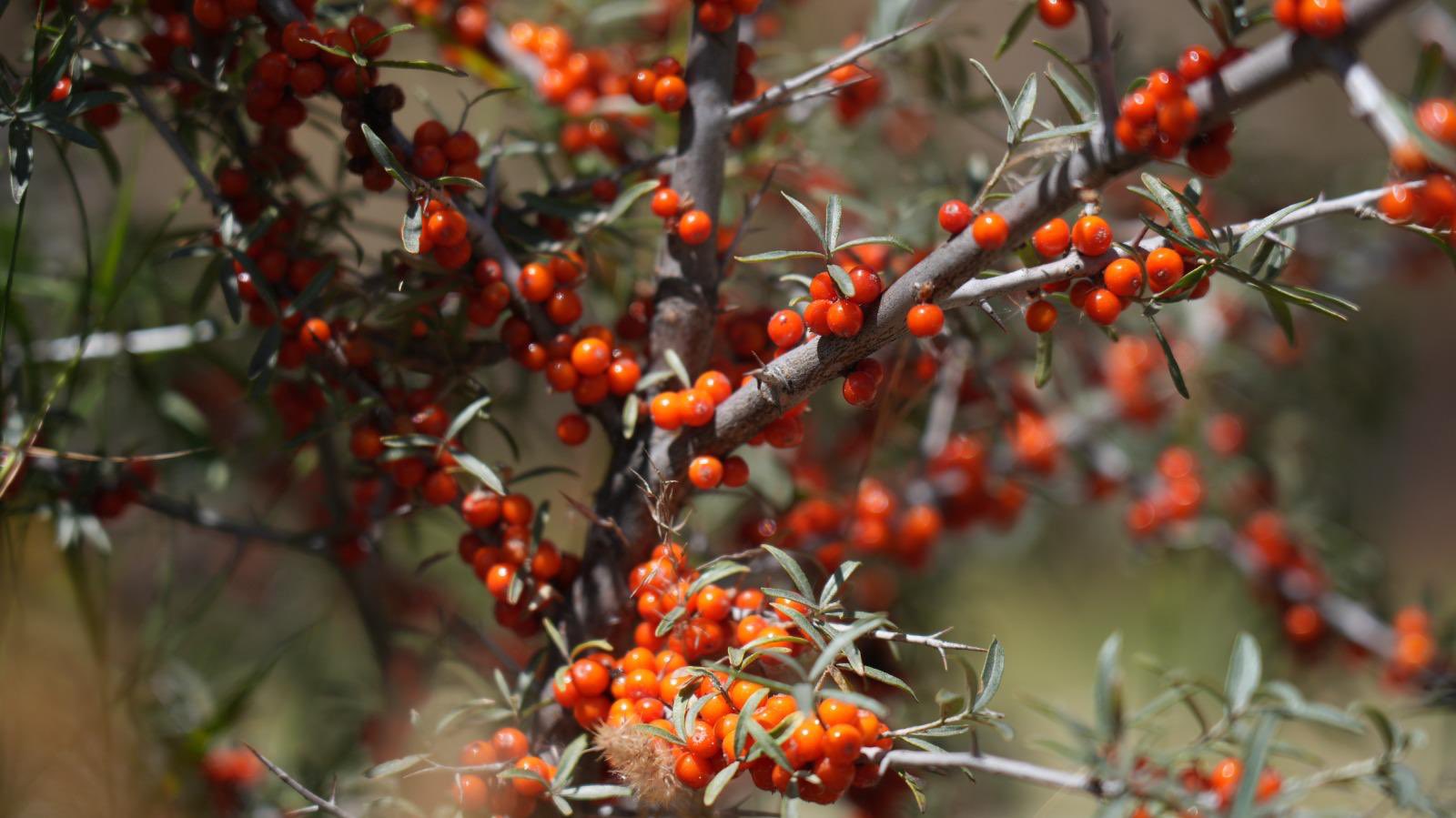
Behind the celebration lies a pressing challenge the administration is determined to fix. Sea buckthorn currently grows wild in dense, thorny clusters that make harvesting extraordinarily difficult — so much so that nearly 85 per cent of the annual crop goes to waste, with only about 15 per cent commercially utilised. Saxena has now set an ambitious turnaround target: at least 50 per cent crop recovery this year, scaling up to full 100 per cent utilisation by next year, powered by the adoption of modern harvesting techniques.
“At present, sea buckthorn grows naturally across Ladakh, which often makes harvesting difficult for farmers. In the coming times, we will promote the cultivation of sea buckthorn in a curated manner so as to harvest the maximum produce,” Saxena said, outlining plans for a comprehensive value chain spanning cultivation, harvesting, processing, packaging, and marketing — all designed to ensure that a larger share of the economic value flows back to Ladakh’s own farmers, entrepreneurs, and communities.
Building the Infrastructure Behind the Boom
Recognising that harvesting remains the single biggest bottleneck for farmers, Saxena stressed that improved extraction techniques, value addition, better packaging, and stronger market linkages will be central to unlocking the crop’s full potential. Institutional support is already following: at the Lieutenant Governor’s request, the Union Ministry of Agriculture has constituted a high-level committee to explore setting up a dedicated National Sanjeevani Research Centre in Nubra Valley, focused on research, genetic improvement, propagation, harvesting, and value addition of sea buckthorn.
Inaugurated the first International Sea Buckthorn Conclave in Leh today, aimed at enhancing the production of Sea Buckthorn, increasing farmers’ income and strengthening the complete value chain around the Ladakh’s “wonder berry”.
Pleased to announce a landmark decision to… pic.twitter.com/Xv11i3PNme
— LG Ladakh (@lg_ladakh) September 18, 2026
The berry’s rising stature has also been formalised through its GI (Geographical Indication) registration, which Saxena described as a landmark step in establishing its authenticity and brand value in both domestic and international markets, alongside its inclusion under the One District One Product initiative for Leh district — a recognition that has further energised the sector.
A Conclave Set Amid Nature Itself
Fittingly, the gathering steered clear of conventional convention halls altogether. The Sea Buckthorn Conclave was hosted amid the natural surroundings of the Choglamsar forest, where sea buckthorn grows in abundance — giving delegates a rare, immersive encounter with the very plant at the centre of the discussions, in its native high-altitude habitat.
With procurement prices doubled, national research infrastructure on the horizon, and a clear roadmap toward zero wastage, Ladakh’s sea buckthorn story is fast emerging as a template for how a humble wild berry can become an engine of rural prosperity — one harvest at a time.