
By Tejas Jamwal
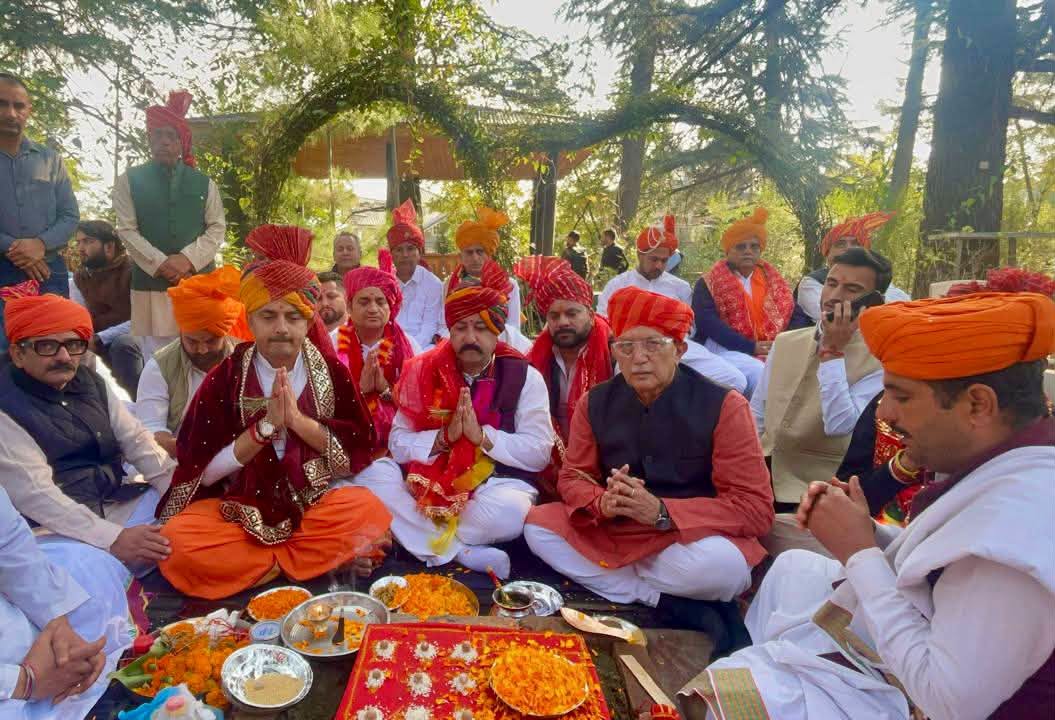
Some journeys are measured not in kilometres but in generations. For the Jammu and Kashmir Kshatriya Samaj, the two-day pilgrimage to the revered Shri Bala Devi Temple at Balhama in central Kashmir’s Budgam district was exactly that: a return to the Kuldevi, the family deity at the root of the community’s identity.
The yatra concluded with traditional puja and havan-yagna, and with a resolve to preserve Kashmir’s civilisational heritage and revive its ancient spiritual connections.
A shrine that holds a civilisation
Leading the yatris through the rituals were Ranbir Singh Pathania, lawyer, columnist, philanthropist and MLA from Udhampur East, and Zorawar Singh Jamwal, President of Team Jammu. Both described Balhama as a living repository of Kashmir’s history, culture and spiritual wisdom, a treasure that rises above geography, religion and time.
“Kashmir’s ancient shrines are not merely places of worship,” Pathania said. “They are living testimonies to a profound spiritual heritage whose message remains eternal, universal and relevant to every age.”
He urged that these treasures be “revered and respected, researched and rediscovered, preserved and showcased to the entire world,” adding that they carry messages of universal brotherhood, spiritual enlightenment and coexistence. “They represent a civilisational inheritance that belongs to humanity.”
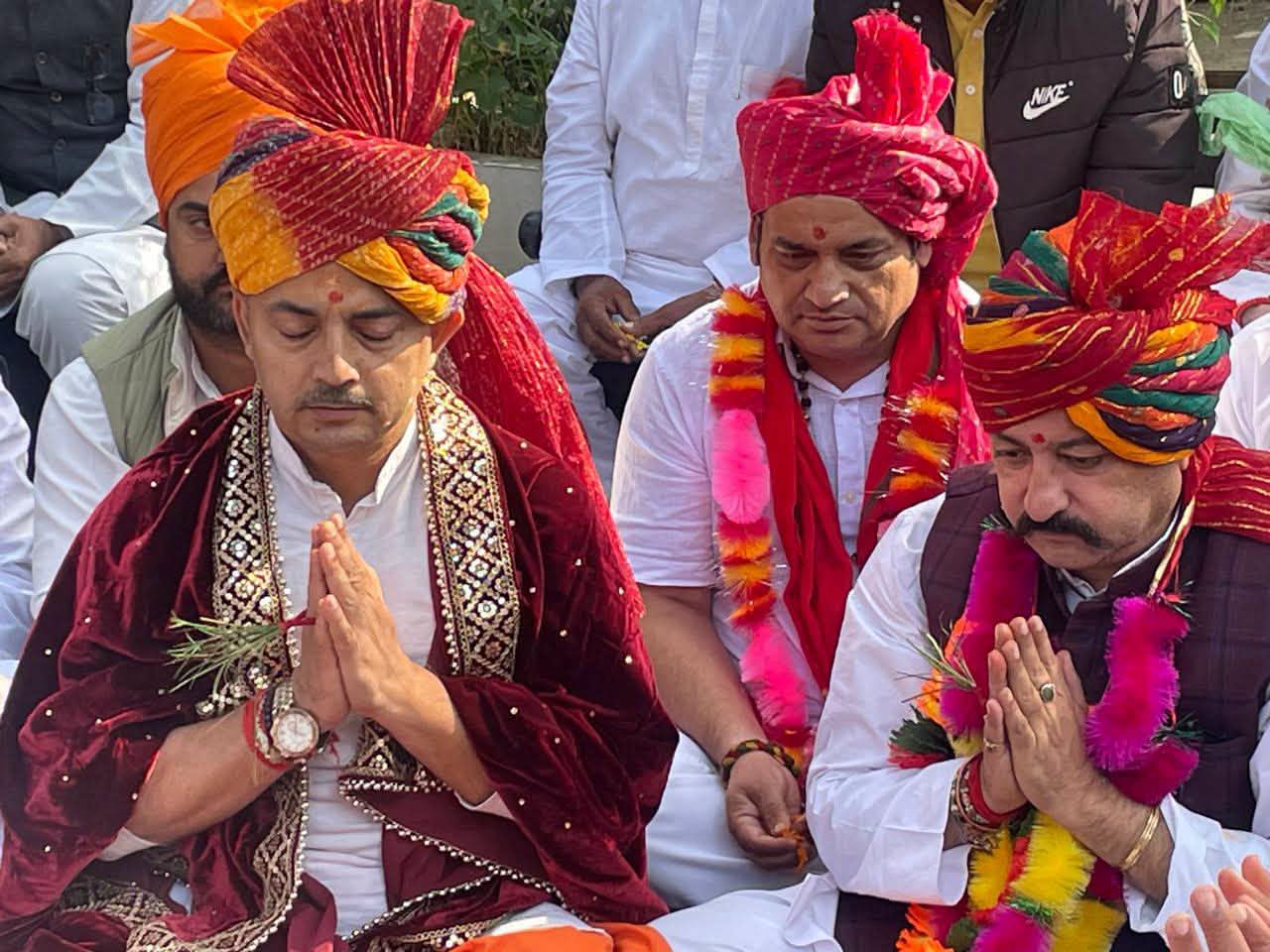
Pathania drew attention to what makes Balhama distinctive: five sacred deodar trees, traditionally linked to an ancient sacred spring, and the revered shilas associated with Tripura Sundari and the Shakta traditions found in Kashmir’s religious literature.
Jamwal echoed the sentiment. “These are not ordinary trees, stones or structures,” he said. “They are repositories of collective memory, faith and tradition. Our sacred heritage must not remain unexplored or hidden from the world.” Preserving such sites, he stressed, demands a collective commitment to scholarship, conservation, pilgrimage and inter-community understanding.
“Today, Balhama; Tomorrow, Sharada Peeth”
The yatra was not meant as a one-off. Pathania described it as the first step in a wider effort to reclaim Kashmir’s forgotten spiritual links and reconnect people with their civilisational roots.
“Today, Balhama; tomorrow, Sharada Peeth in the Neelam Valley,” he declared. “Our resolve is to open a permanent channel for pilgrimage to the revered Sharada Peeth in POJK and to lead a yatra there when circumstances permit. We want these sacred connections restored through peaceful, lawful and sustained efforts.”
He spoke of the wounds inflicted on places of worship during years of fanaticism, terrorism and fundamentalism, wounds he said were borne not by individual communities alone but by Kashmir’s shared cultural inheritance. Yet his answer was restraint, not rancour. “The answer to hatred cannot be hatred,” he said. “Our response must be preservation, scholarship, pilgrimage, mutual respect and an unwavering commitment to coexistence.”
The neighbours who stood guard
Perhaps the most moving aspect of the pilgrimage was the warmth with which local Muslim residents of Balhama received the yatris. Their role in protecting the shrine through the darkest years of terrorism was held up as a powerful example of humanity and communal coexistence.
“The people of Balhama have conveyed a message that deserves to be heard far beyond Kashmir,” Pathania said. “When people stand together to protect a place of worship, they protect the dignity of an entire civilisation. This is the true spirit of Sarva Dharma Sambhav.”
He placed Balhama within India’s long tradition of spiritual pluralism, invoking the wisdom of the Vedas and Puranas, the legacy of Emperor Ashoka, the ideals of the Ramayana, and the interfaith engagements of Akbar and Dara Shikoh. “The message of coexistence is not an expedient slogan,” he said. “The protection of one community’s shrine by members of another is not a concession; it is an expression of our shared humanity.”
Officials, trustees and community turn out
The concluding ceremonies drew senior police and administrative officers, representatives of the Dharmarth Trust, community leaders and a large gathering of residents and yatris. Among those present were Purshotam Pathania, President of the Jammu and Kashmir Dharmarth Trust; Sheikh Ajaz, DDC Khanmoh; and Sewa Singh Mankotia, SP (Retd). They commended the Kshatriya Samaj for reconnecting the community with its sacred heritage and for promoting the preservation of Kashmir’s religious and cultural landmarks.
The organising team included Samar Singh Rana, Sheikh Singh, Ban Kotia, Yashpal Manhas, Surjit Singh, Sarpanch Vikram Singh, Sarpanch Himmat Singh, Deep Singh, Sukhdev Singh, Shubham Sharma, Purshotam Singh, Chain Dehati, Bharat Chand, Anmol Bandral, Ravinder, Avinash, Gurdev, Lochan Singh and Mangat Ram.
The yatra closed with a renewed pledge to protect Kashmir’s spiritual heritage, deepen inter-community harmony and keep working peacefully towards pilgrimage to Sharada Peeth.
“Our mission is not merely to revisit sacred places,” the closing message read. “It is to rediscover the wisdom they embody, protect the heritage they represent and carry their universal message to future generations. Balhama is a beginning. Sharada Peeth remains our resolve.”