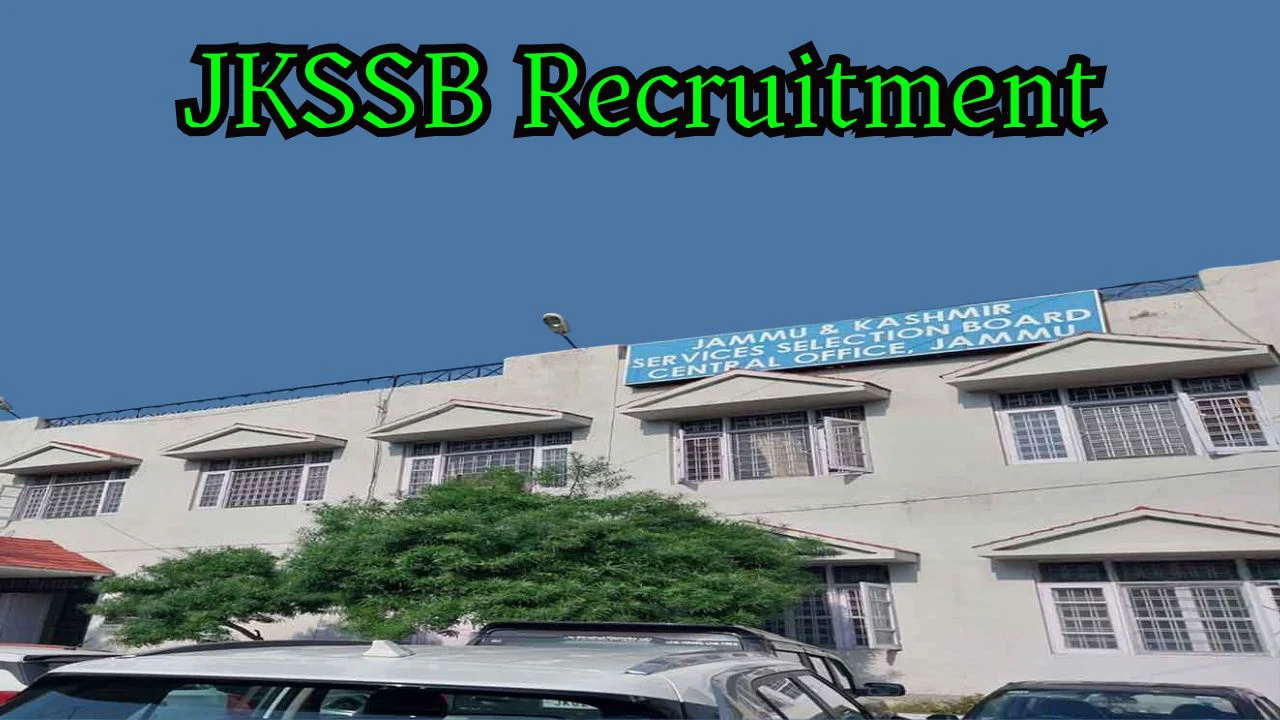
The Jammu and Kashmir Services Selection Board has long ceased to be a recruitment agency. It has degenerated into a den of the exam mafia—where question papers are merchandise, merit is negotiable, and the dreams of genuine, hardworking candidates are systematically auctioned to the highest bidder.
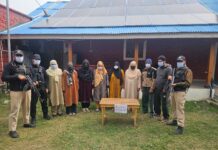
The latest exposé around the Finance Accounts Assistant examination held on November 15 only confirms what thousands of aspirants already know in their bones. Around 1.61 lakh candidates competed for just 600 posts. The very next day, Jammu Police claimed to have busted a cheating racket, recovering wireless devices, 22 mobile phones, four vehicles and—most damningly—question papers, including a “Set B” paper.
Police insist the recoveries were made before the examination began. If that is true, the question writes itself: how did the gang already possess the question papers before a single candidate entered the examination hall?
JKSSB’s hurried clarification on Thursday tried to dismiss the episode as an “isolated attempt” that did not compromise the process. The Board praised the police, listed its multi-layered security arrangements—CCTV, jammers, biometric checks, flying squads—and declared the sanctity of the examination intact.
The statement reeks of institutional self-preservation. When the papers themselves were circulating before the exam, the claim of airtight security collapses into farce.
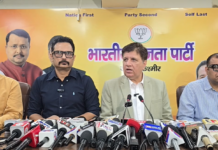
Party leader Ms. @IltijaMufti_ today addressed the media on the JKSSB examination controversy, questioning the ruling government’s failure to deliver on the tall promises made by none other than Chief Minister @OmarAbdullah himself. The latest controversy has once again exposed serious concerns surrounding the conduct of recruitment examinations in J&K.
Repeated cancellations, allegations of malpractice and assurances that remain unfulfilled have left thousands of aspirants paying the price. Our youth deserve a transparent, credible and accountable recruitment system, not another round of committees and hollow promises.
— J&K PDP (@jkpdp) November 20, 2026
PDP leader Iltija Mufti cut through the official fog with brutal clarity. Addressing a press conference in Srinagar, she declared that cheating in J&K recruitment exams is no longer the exception; it is the established norm. From the 2022 Police Sub-Inspector examination, where papers were allegedly sold for ₹15–20 lakh each, to Jal Shakti, Civil Services and Fire & Emergency Services recruitments, the pattern has repeated with depressing regularity since 2019.
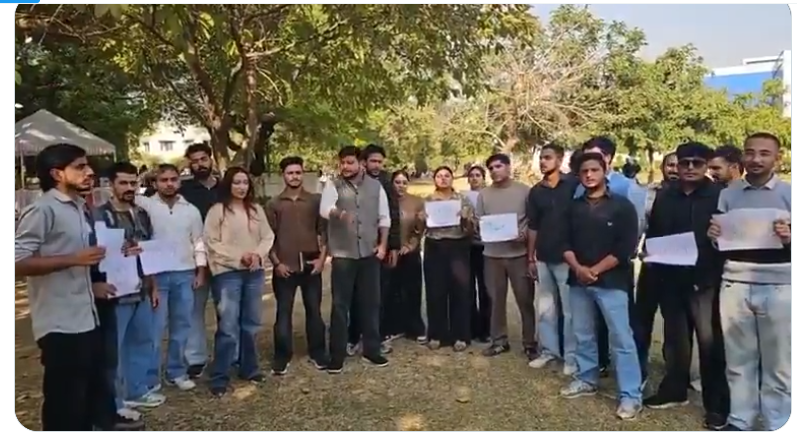
ABVP Jammu Kashmir & Ladakh demands a fair and independent inquiry into the alleged organised cheating attempt during the #JKSSB Finance Accounts Assistant examination. Jammu Police have apprehended 14 persons and seized electronic devices. We demand a thorough investigation to identify all involved persons and take action strictly as per law so that the rights of genuine aspirants are protected.
@OfficeOfLGJandK @jkssb_official @ABVPVoice
#ABVPJKL #FAAExam #JKSSB #FairInquiry #ExamIntegrity #CBIProbe #YouthOfJKL
— ABVP JAMMU KASHMIR LADAKH (@abvpjk) November 18, 2026
JKSSB turned into an exam mafia den: The Board is accused of systematically enabling paper leaks and cheating, where genuine and meritorious candidates lose out to those who pay the mafia.
Finance Accounts Assistant exam scandal: Held on 15 November for 600 posts (1.61 lakh candidates). Police recovered question papers (including Set B) the next day, claiming the recovery was made before the exam began — raising serious questions about how the papers reached the cheating gang in advance.
JKSSB’s weak defence: The Board called it an “isolated incident” and claimed the exam’s sanctity was not compromised, while praising its multi-layered security arrangements.
Iltija Mufti’s strong attack: Cheating in J&K recruitment exams has become the norm, not the exception. Similar scams occurred in Police SI (2022), Jal Shakti, Civil Services, and Fire & Emergency Services exams since 2019.
High-value paper leaks: In the 2022 Police Sub-Inspector exam, papers were allegedly sold for ₹15–20 lakh each.
Sophisticated inside job: Micro-chips found in candidates’ ears can only receive signals, indicating that the question paper was photographed and leaked from inside the examination system.
₹113 crore collected in fees: Between 2023 and 2026, JKSSB collected around ₹113 crore from aspirants as application fees, even as exams continued to be cancelled or tainted by scams.
Questionable vendors: Engagement of blacklisted firms like Aptech for conducting exams.
Omar Abdullah’s contradictory stand: The Chief Minister claimed JKSSB is not under his control when questioned, yet earlier held a review meeting and publicly spoke about reforming the Board.
Impact on youth: Legitimate aspirants are losing hope, leading to depression and drug abuse in a conflict-affected region where government jobs are seen as the most secure career option.
Upcoming threat: The Police Sub-Inspector exam scheduled for 29 November is already under a cloud of suspicion.
Demand: Transparent probe, accountability of JKSSB officials, and restoration of trust among genuine candidates.
The micro-chips recovered from candidates’ ears, she pointed out, can only receive signals. That means someone inside the system—likely an invigilator—photographed the paper, transmitted it outside, and answers were beamed back. This is not the work of a few rogue candidates.
It is a sophisticated, well-oiled syndicate operating with inside help.Between 2023 and 2026, JKSSB has collected roughly ₹113 crore in application fees from aspirants. Yet exams keep getting cancelled or tainted.
Students grind for years, empty their pockets for forms, and then watch the process dissolve into scandal. Where does the money go? Who benefits when the board repeatedly engages firms with questionable track records, such as the blacklisted Aptech? The answers are never forthcoming.
Chief Minister Omar Abdullah’s responses only deepen the cynicism. When students approached his office, he claimed JKSSB was not under his control. Yet in May he held a review meeting on the board’s functioning and publicly tweeted about ensuring transparent, time-bound recruitment.
When credit is available, JKSSB belongs to the government. When accountability is demanded, it suddenly becomes an independent island. The youth of Jammu and Kashmir, living in a conflict zone where a government job remains the most secure path to dignity, are watching this double-speak with mounting despair.
Many are sliding into depression and substance abuse. That moral and social cost sits squarely on the shoulders of JKSSB and the political leadership that refuses to clean the Augean stables.
The upcoming Police Sub-Inspector examination scheduled for November 29 already carries the stench of suspicion. Admit cards have been issued, but trust has not. Every genuine candidate—those who actually studied, those whose parents mortgaged land or sold jewellery to fund coaching—knows the brutal arithmetic: intelligence and hard work are secondary when the exam mafia has already sold the paper.
JKSSB’s statements about “merit,” “level playing field” and “institutional obligation” now ring hollow. Until a transparent, independent probe is ordered, until officials who leaked papers and those who protected the system are held to account, and until the board is purged of the networks that have turned recruitment into a marketplace, every new examination will be viewed not as an opportunity but as another transaction. The den of the exam mafia remains open for business. The only people shut out are the ones who refused to pay.