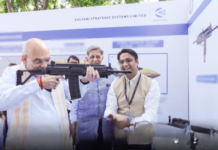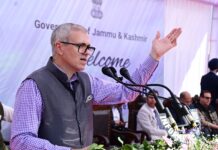
Union Home Minister Amit Shah on Saturday launched a sharp attack on former Jammu and Kashmir Chief Minister Farooq Abdullah, recalling that he had left for England during the height of militancy in the early 1990s, while security forces continued to safeguard the Valley and maintain its connection with the rest of the country.
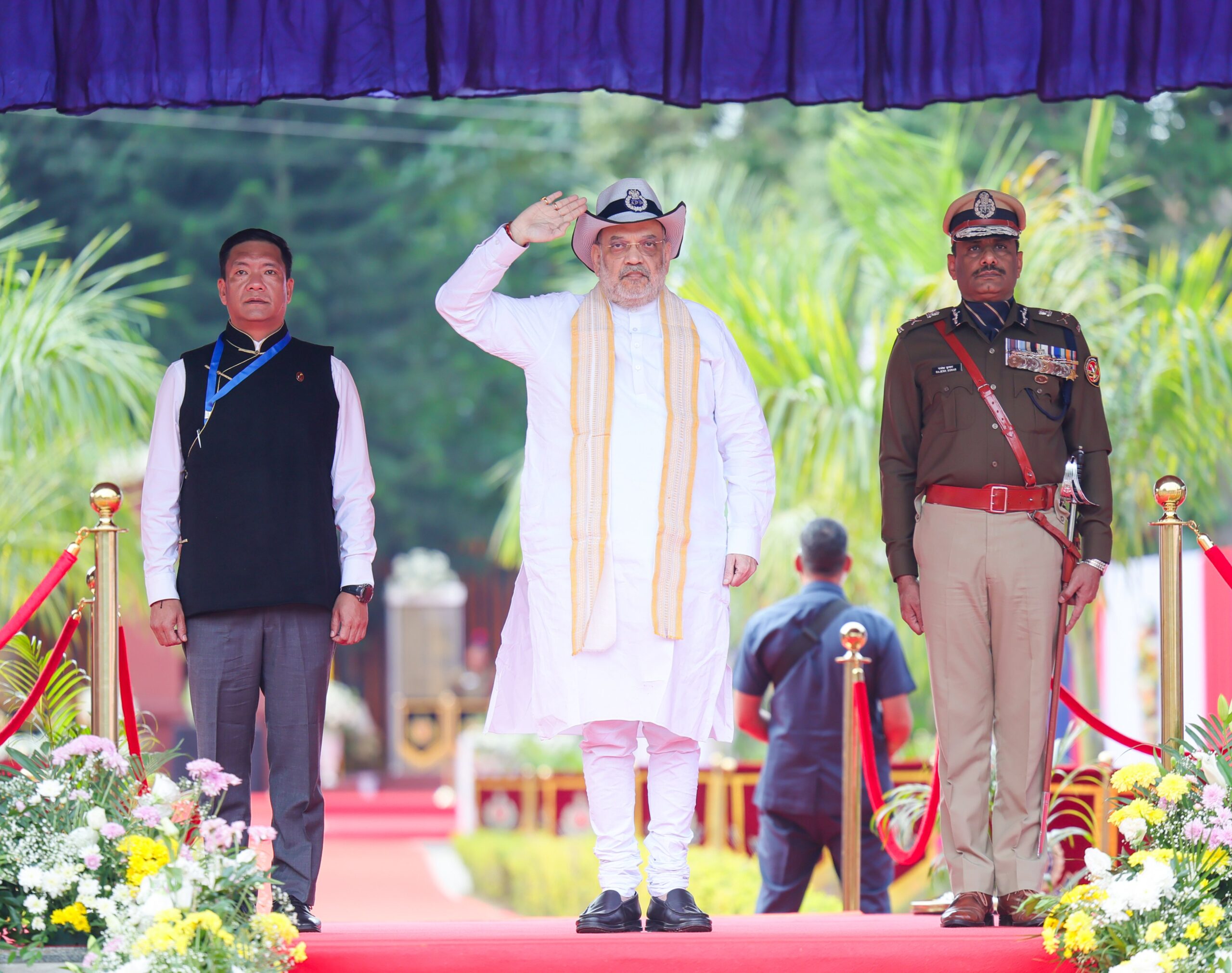
Addressing the President’s Police Colour Award Ceremony in Arunachal Pradesh’s Banderdewa, Shah praised the role of security forces in combating terrorism in Jammu and Kashmir and asserted that the Valley no longer has any active local terrorists following the recent killing of self-styled Lashkar-e-Taiba (LeT) commander Lateef Bhat.
Reflecting on the turbulent period of the 1990s, Shah said there was widespread uncertainty over whether Kashmir could withstand the growing wave of terrorism.
“When we look back at the Kashmir Valley of the 1990s, there were serious doubts about how long India would be able to hold on to Kashmir,” he said.
In an apparent reference to Farooq Abdullah, Shah remarked, “At a time when terrorism had reached its peak in the early 1990s, the then Chief Minister left for England. It was our courageous security forces who ensured that Kashmir remained connected with the rest of India.”
The Home Minister also defended the Centre’s decision to abrogate Article 370 in August 2019, noting that opposition parties had questioned the government’s assertion that the special constitutional provision had contributed to separatism and terrorism in the region.
“Today, I can proudly say that the removal of Article 370 has weakened separatist tendencies among the youth of Kashmir. The strongest evidence of this change is that not a single Kashmiri youth is currently involved in terrorism in the Valley,” Shah said.
Highlighting recent counter-terror operations, Shah stated that Kashmir Police had eliminated the last known active local Lashkar-e-Taiba terrorist in Pulwama.
“With the neutralisation of Lateef Bhat, there is not a single local terrorist left active in the Kashmir Valley. Those who remain are foreign terrorists,” he said, describing the operation as a significant milestone in the fight against militancy.
According to Shah, the killing of the militant was not merely the end of one terrorist but a symbolic step towards ending separatist sentiment in the region.
“This is not just the end of a terrorist. It marks the beginning of the end of separatist thinking in Kashmir,” he said.
The Home Minister credited Prime Minister Narendra Modi’s government for accelerating development and strengthening peace and stability in Jammu and Kashmir since 2014, expressing confidence about the region’s future prospects.
Shah was speaking at the ceremony conferring the prestigious President’s Police Colour on the Arunachal Pradesh Police, an honour he described as a landmark achievement for the force and the people of the state.
Calling Arunachal Pradesh strategically vital to the nation, Shah said its security, peace, prosperity and development remain of paramount importance to India’s national interests. He also lauded the state’s police force for its dedication and service, stating that the award would inspire generations of officers in the years to come.