It took only minutes. As the dust settled in Kulgam and the guns fell silent, Union Home Minister Amit Shah went public with a line that has since overshadowed the encounter itself: Lashkar-e-Taiba commander Lateef Bhat, he said, was the Valley’s last known active local terrorist.
With the coordinated efforts of JKP, Indian Army, CRPF and intelligence agencies, Lashkar’s last known active local terrorist in the valley, Lateef Bhat, was neutralised in an operation in Kulgam in the early morning hours today. One of his terrorist associates, Umar Nisar, was also neutralised in Kulgam, the day before. The entire operation was marked by a very high level of synergy.
The nation salutes the brave Jawans of JKP, Army and CRPF and intelligence agencies.
— Amit Shah (@AmitShah) November 18, 2026
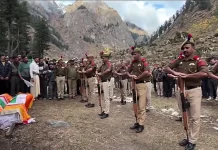
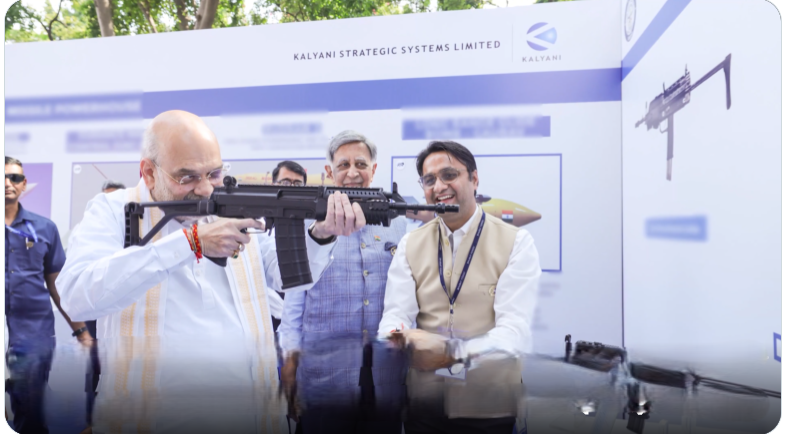
“With the coordinated efforts of Jammu and Kashmir Police, Indian Army, CRPF and intelligence agencies, Lashkar’s last known active local terrorist in the Valley, Lateef Bhat, was neutralised in an operation in Kulgam in the early morning hours today,” Shah wrote on social media. He noted that Bhat’s associate Umar Nisar had been killed in Kulgam a day earlier, and said the operation was marked by “a very high level of synergy.” He added that the nation salutes the jawans of J&K Police, the Army, CRPF and the intelligence agencies.
The question many are now asking is why the Home Minister chose to make such a sweeping statement so soon after the encounter.
Why the statement matters
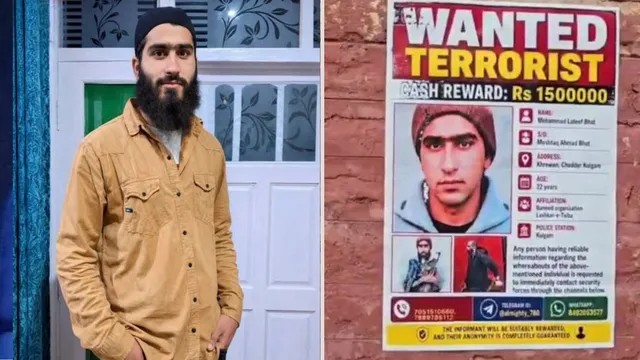
Bhat was no ordinary militant. A self-styled LeT and TRF commander with a Rs 15 lakh bounty, he had risen to become one of the most wanted faces of militancy in the Valley within a year of joining. He was accused of killing a policeman at Lal Chowk, Anantnag, and two labourers from Chhattisgarh in Kulgam in July, besides leading an attack on a CRPF team in Akhran. By tying his name to the phrase “last known local terrorist,” Shah turned a single encounter into a milestone.
The announcement appears to serve several purposes at once:
A narrative marker. For years, the biggest worry in Kashmir’s security grid was the steady flow of local youth into militancy. Declaring that the last known local active terrorist has been eliminated signals that this recruitment-driven cycle has been broken, at least on paper.
Credit and morale. By naming the Police, Army, CRPF and intelligence agencies together, Shah underlined that joint operations are working, and gave the forces public recognition on a day that cost them days of exhausting pursuit.
A message to those still tempted. Bhat’s story, a Class 12 pass-out who dropped out of college and had worked as a plumber, electrician and carpenter before picking up a gun, ended within a year. The timing of the announcement drives that point home.
A message across the border. Militants who remain active in the Valley are now, by implication, overwhelmingly foreign nationals, which sharpens the focus on cross-border infiltration.
Note the wording, though. Shah said “last known” local terrorist. The qualifier leaves room for intelligence gaps, new recruits or sleeper networks that agencies have not yet identified. The claim is a statement of the current security assessment, not a guarantee, and it will be tested over the coming months.
The mosque standoff
The final hours of Bhat’s life gave the operation its own dramatic weight. Acting on credible intelligence from J&K Police, a joint team cordoned off Jangalpora village in Kulgam. Spotting the forces, Bhat tried to break through the cordon and opened fire, but the swift response foiled his escape. He then took refuge in a nearby mosque at around 2:30 pm on Wednesday.
Forces stopped firing out of respect for the sanctity of the place of worship. Senior Army and police officers rushed to the spot and urged him to surrender, personally and through a local cleric. Security forces also reportedly reached him by video call, with an officer telling him, “We are with you.” Bhat refused, saying, “I want to meet Allah. I am very happy.”
His body and a weapon were recovered after the operation.
The manhunt behind it
The end came after a relentless search that began with the Akhran attack. Police interrogated more than 500 suspects, detained 20 people for questioning, and identified three overground workers allegedly linked to LeT and TRF. Several possible hideouts were mapped. Bhat narrowly escaped the encounter in Laroo that killed Umar Nisar, and slipped away to Jangalpora, where his run finally ended.
Bhat’s elimination closes one of the most closely watched manhunts in south Kashmir this year. Whether Shah’s declaration marks a lasting turning point or only a significant milestone is what officials, analysts and the Valley itself will be watching next.