Over 25,000 winter visitors, including bar-headed geese, begin arriving near the international border as the wetland becomes a vibrant avian hub.
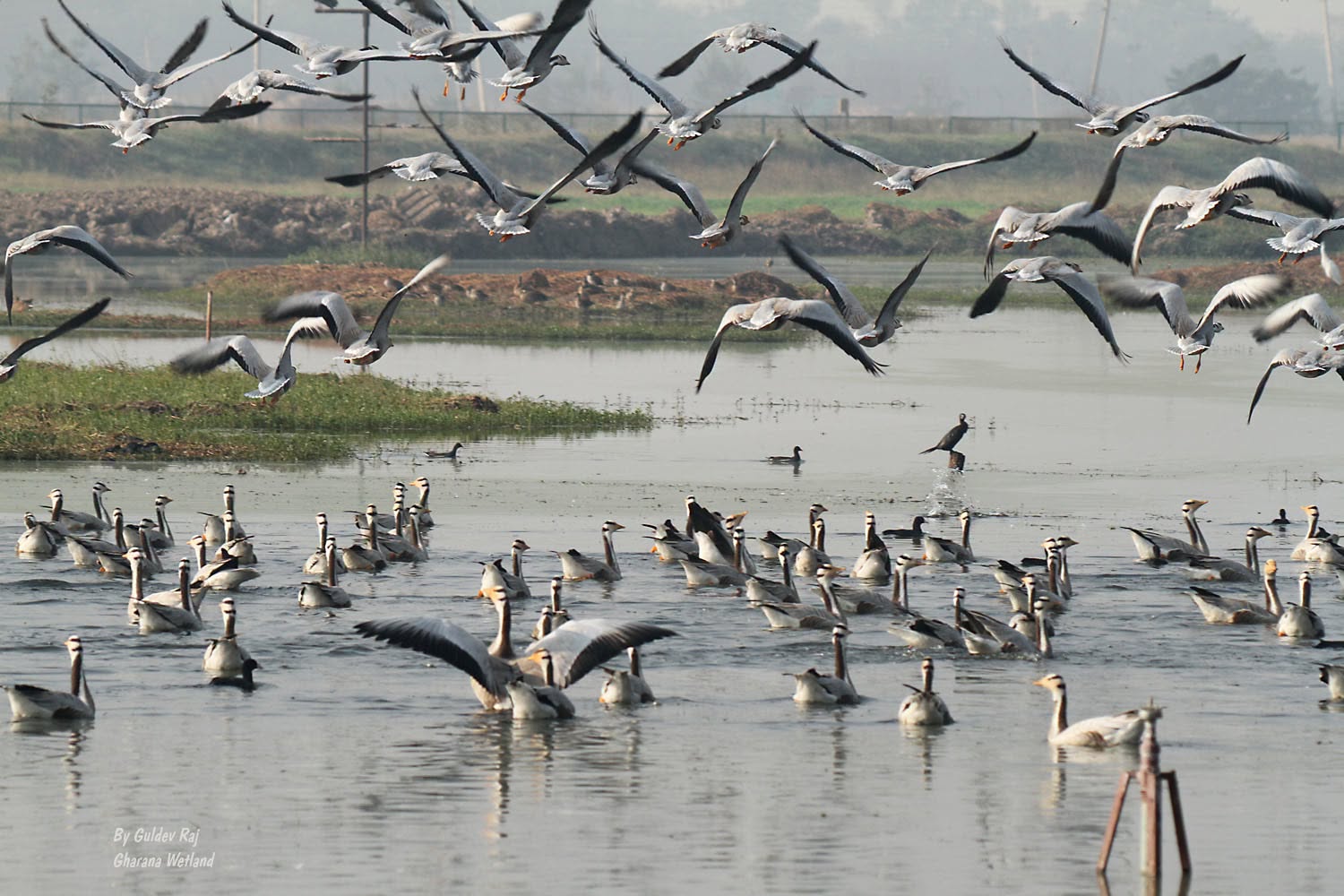
The first flocks of migratory birds have begun arriving at Gharana Wetland, the well-known conservation reserve located near the international border in the R.S. Pura sector of Jammu and Kashmir. Among the early arrivals are around 300 bar-headed geese, one of the world’s highest-flying bird species, known for crossing the Himalayas, including Mount Everest, during their long migrations.
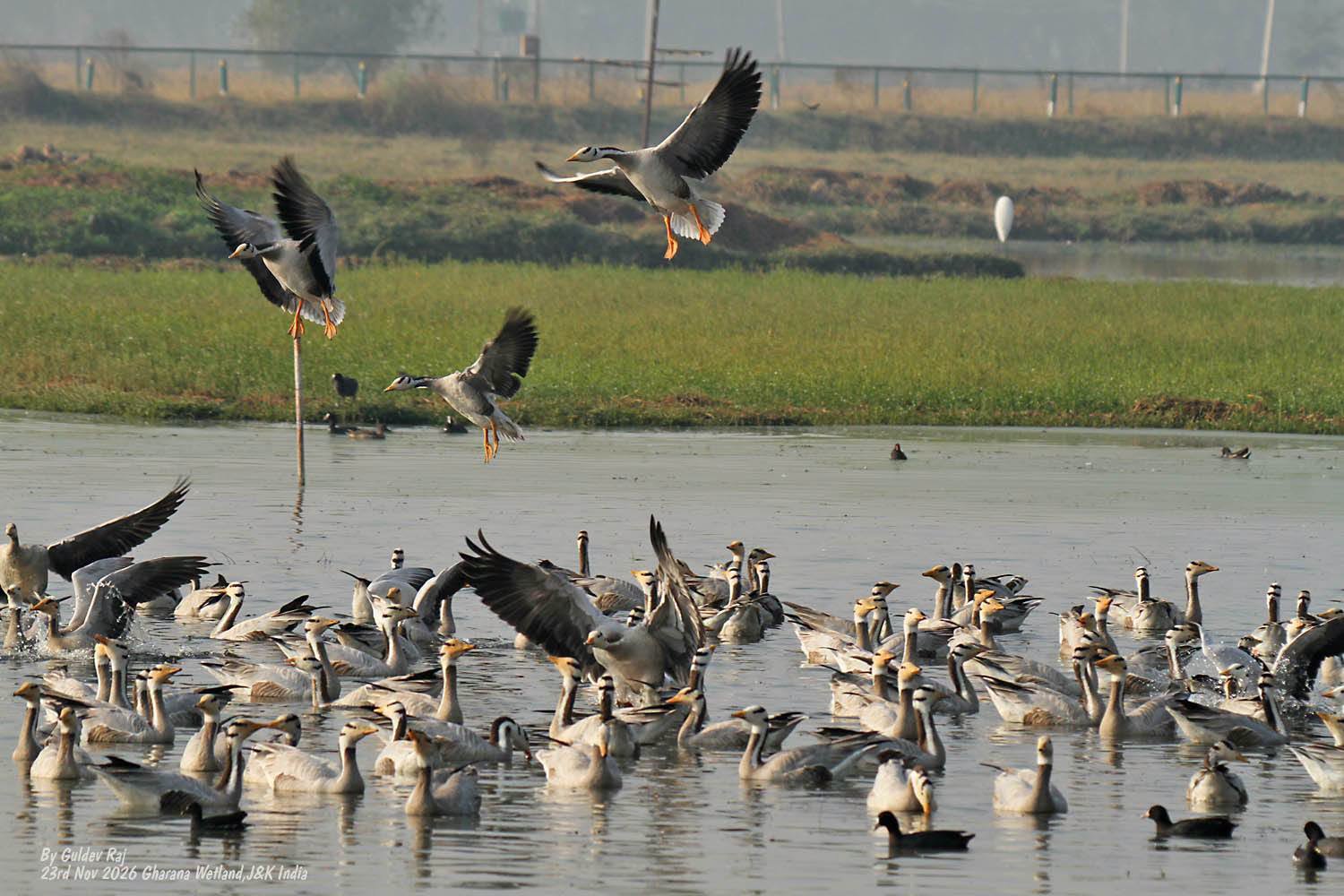
Every winter, between 25,000 and 30,000 migratory birds from Central Asia and beyond descend on the wetland. Numbers are expected to rise steadily in the coming weeks.
Guldev Raj, a member of the J&K Wildlife Board and founder of Himalayan Avian, said the bar-headed geese population at Gharana typically reaches 6,000 to 7,000 each season.
“It has been a great delight for me to witness the arrival of the first batch of bar-headed geese every year since 2005,” Raj said.
“Each time, I have had the privilege of observing their graceful landing at the Gharana wetland.
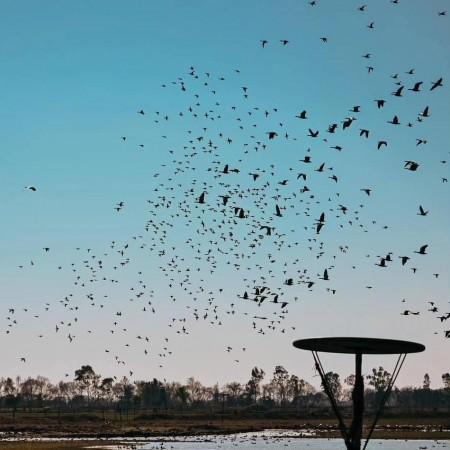
”Situated about 35 kilometres from Jammu in the Suchetgarh area, the semi-arid wetland and its surrounding agricultural landscape form an important habitat for both aquatic and terrestrial wildlife.
More than 150 migratory bird species use the site each winter, with birdwatchers often able to spot nearly 50 species in a single visit.
The wetland lies along two major migratory corridors—the Central Asian Flyway and the East Asian–Australasian Flyway—making it a crucial wintering ground.
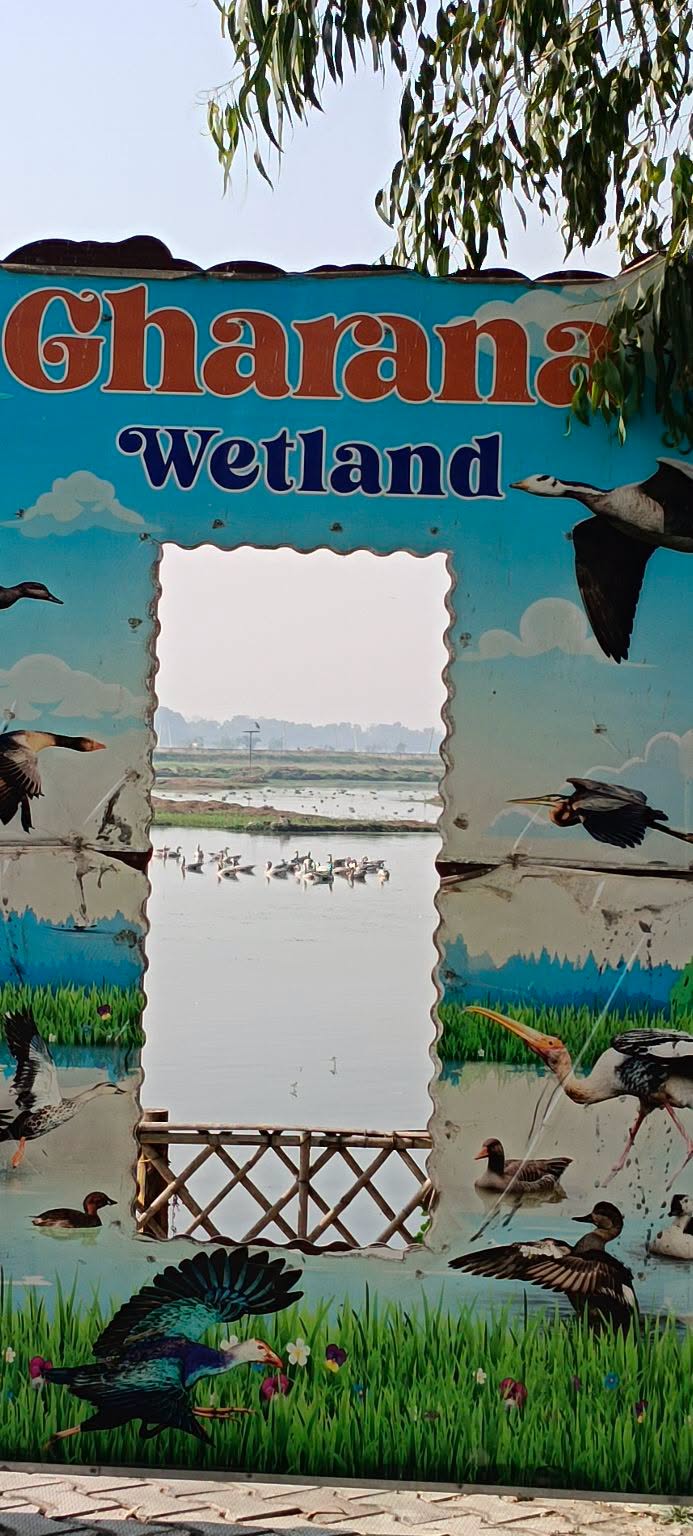
Recognised as an Important Bird Area (IBA) and considered a potential Ramsar site, Gharana also serves as a centre for research and conservation education.
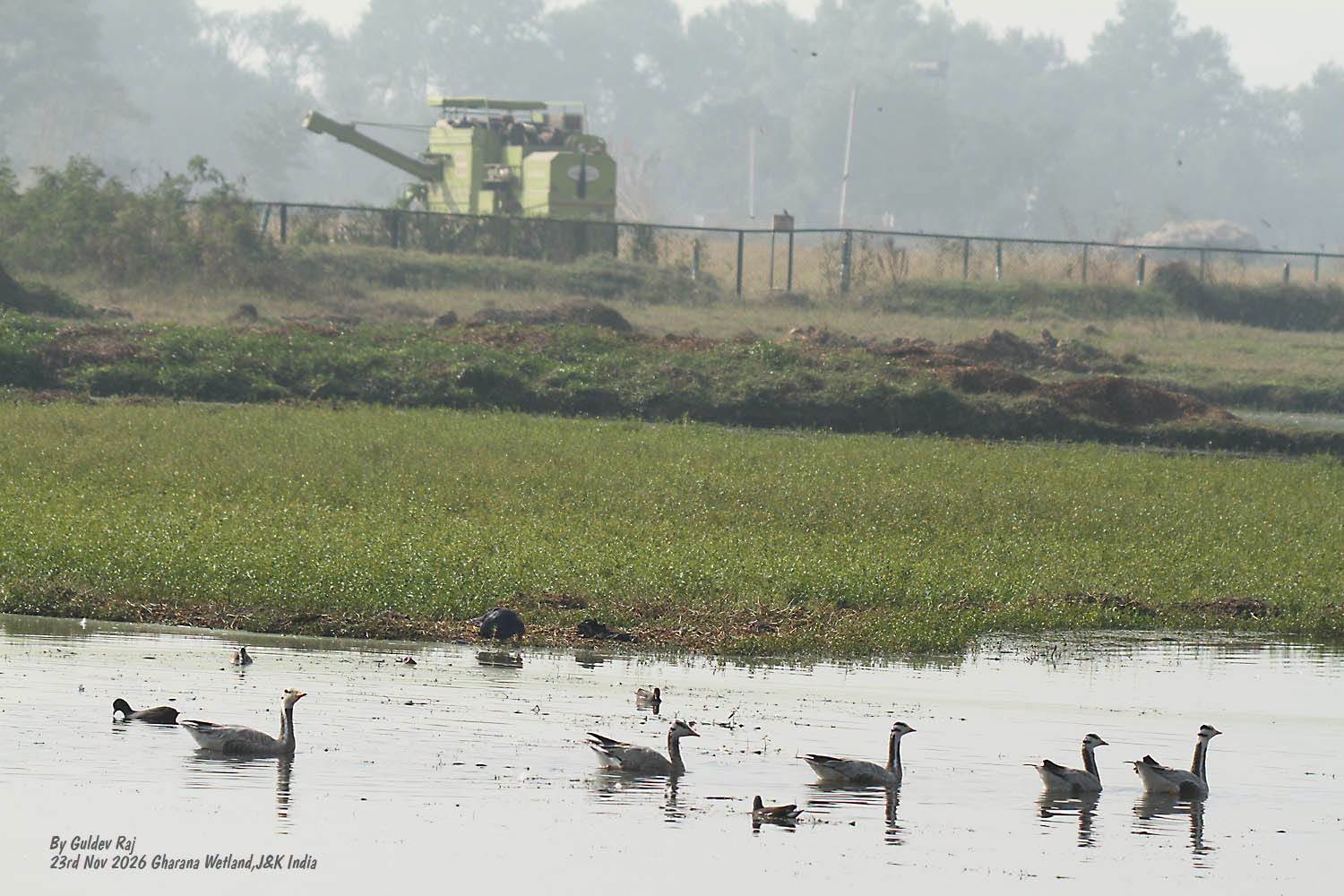
Its growing ecotourism potential offers opportunities for sustainable livelihoods for local communities.
As temperatures drop across Central Asia and Russia, the birds find abundant natural feed at Gharana and remain for three to four months. Authorities have made arrangements to support the winter visitors, ensuring the wetland continues to function as both a thriving ecosystem and a celebrated birding destination.
EOM